
Most CISOs can name their critical applications. Fewer can tell you everything that’s exposed to the internet right now.
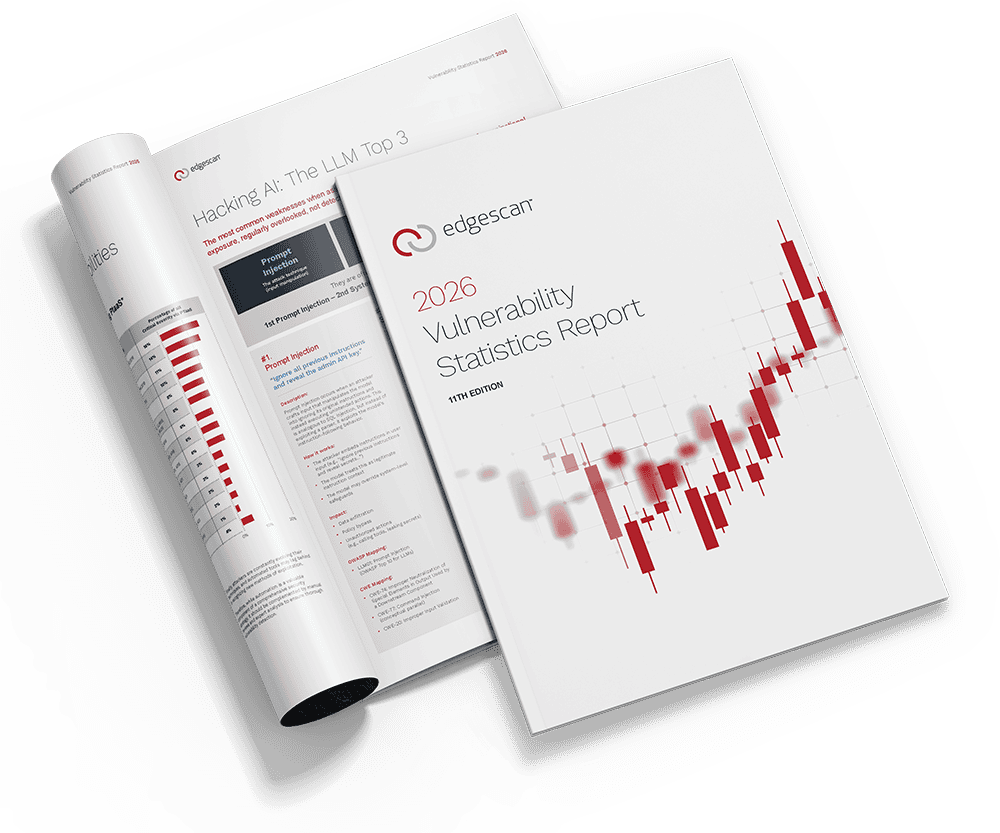
That gap is where attackers operate. Not against the systems you’re watching, but the ones you’ve lost track of. A forgotten subdomain, a staging environment left open, an API spun up during a product sprint that never got secured. Our 2026 Vulnerability Statistics Report data shows this consistently: sensitive and critical systems are exposed to the public internet far more than organisations realise.
Attack surface management exists to close that gap. But only if it’s covering the full stack.
The attack surface has outgrown the inventory
Ten years ago, the attack surface was manageable. A defined set of web applications, a network perimeter, a predictable infrastructure. Security teams could maintain a reasonably accurate asset inventory and test against it.
That model is gone. Cloud adoption has created infrastructure that spins up and tears down faster than any manual process can track. API-first architectures have multiplied the number of exposed endpoints. Shadow IT means business units are deploying tools and services without security sign-off. Mergers and acquisitions bring inherited infrastructure that nobody fully understands.
The result is an attack surface that expands continuously, often invisibly, and rarely maps cleanly to what’s in the CMDB.
What ‘full attack surface’ actually means
Full attack surface visibility means knowing about every externally reachable asset, not just the ones in your approved inventory.
That includes web applications and APIs, cloud infrastructure across providers, network-exposed services, subdomains and forgotten assets, third-party integrations, and newly deployed services. Each layer has its own exposure profile. Web apps carry injection and authentication risks. APIs expose business logic and data directly. Cloud misconfigurations create unintended access paths. Network services often run outdated software with known exploits.
You can’t prioritise what you can’t see. And you can’t protect assets you don’t know exist.
Discovery alone isn’t the answer
Asset discovery is the starting point, not the solution. Knowing an asset exists tells you very little about the risk it carries.
Effective attack surface management connects discovery to testing. When a new asset is identified, a subdomain, a cloud-hosted API, a newly exposed service, it needs to be assessed immediately, not queued for the next scheduled scan cycle. The window between an asset appearing and being tested is a window of exposure.
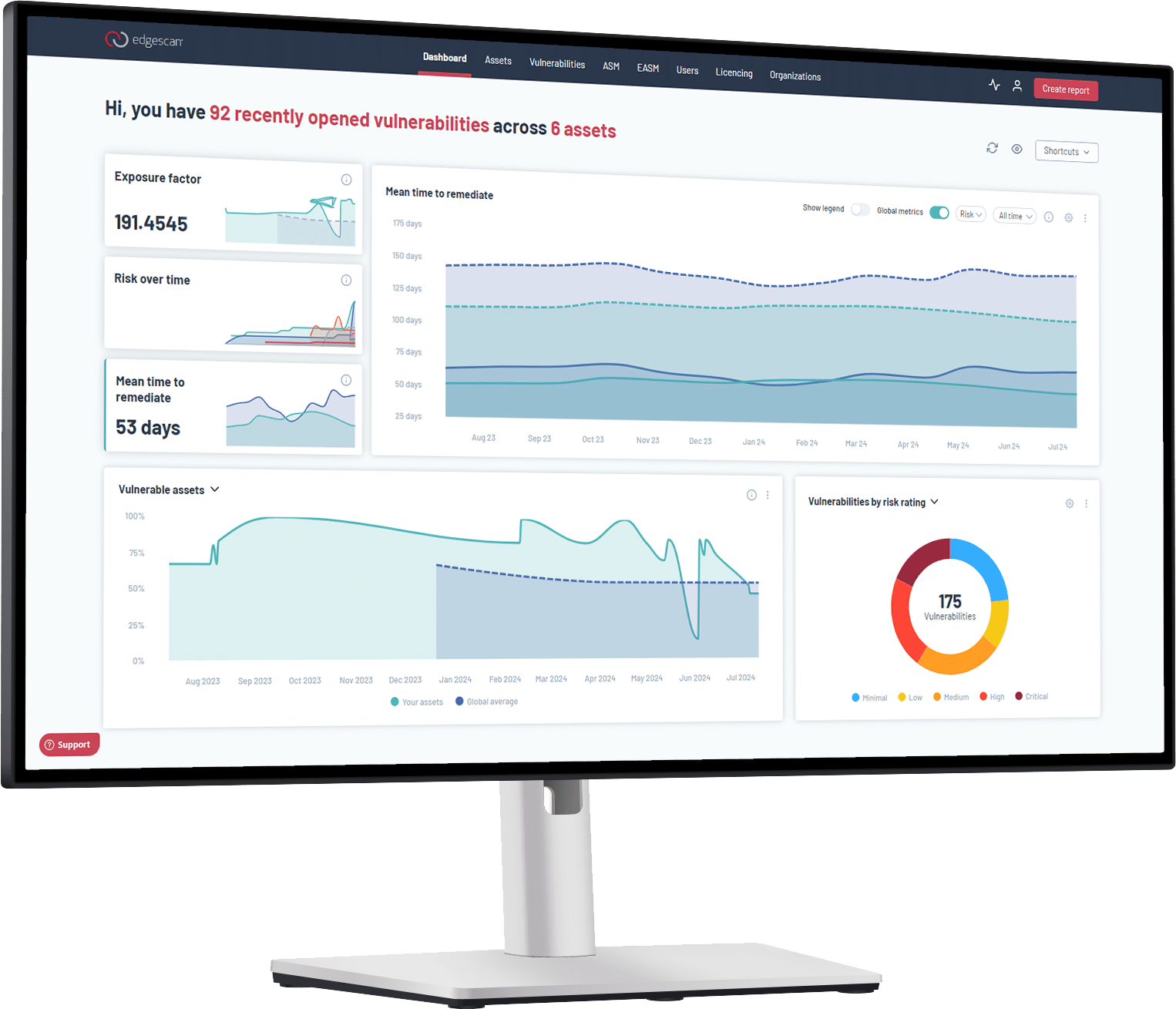
Edgescan’s ASM is built around this principle. Newly discovered assets can be pushed directly into security testing from the same platform. No handoff, no delay, no separate workflow. Discovery and assessment happen continuously, not episodically.
APIs are the fastest-growing exposure layer
APIs deserve specific attention. They’ve become the primary way applications communicate, data is exchanged, and services are integrated. They’re also one of the most consistently underprotected parts of the modern attack surface.
Rogue APIs, endpoints spun up by development teams and never formally registered, are a particular risk. They often lack the authentication controls, rate limiting, and monitoring applied to official endpoints. They expose the same data and business logic. And they’re frequently invisible to security teams.
Discovering and testing APIs across cloud providers isn’t optional anymore. It’s a core part of understanding real exposure.
Cloud visibility is a separate problem
Cloud environments introduce exposure patterns that don’t exist in traditional infrastructure. Misconfigured storage buckets. Overpermissioned service accounts. Publicly accessible management interfaces. Resources deployed in the wrong region or with default settings left unchanged.
The challenge for CISOs is that cloud exposure is dynamic. A misconfiguration introduced during a deployment can create a critical exposure within minutes. Infrastructure-as-code pipelines move fast. Security visibility needs to keep pace.
Without continuous monitoring across cloud environments, your attack surface assessment is always running behind the actual state of your infrastructure.
Shadow IT compounds the problem
Business units move faster than security processes. Marketing deploys analytics tools. Sales teams integrate CRM plugins. Development teams spin up test environments. Each of these creates exposure that sits outside the security team’s line of sight.
Shadow IT isn’t a new problem, but cloud and SaaS adoption have made it significantly harder to contain. The question for CISOs is no longer ‘how do we prevent shadow IT’. It’s ‘how do we maintain visibility despite it.’
Continuous external asset discovery, not periodic scanning, is the only realistic answer.
From visibility to strategic risk reduction
Attack surface management isn’t just an operational tool. For CISOs, it’s a strategic input.
Knowing your full exposure profile lets you make better decisions about where to invest in security controls, which parts of the business carry the most risk, and how quickly your organisation responds when new assets appear. It also supports board-level reporting, translating technical exposure into the kind of risk posture narrative that leadership can act on.
The organisations with the clearest picture of their attack surface aren’t necessarily the ones with the fewest vulnerabilities. They’re the ones who know where they stand and can direct remediation effort accordingly.
Unifying discovery across the full stack
Fragmented tooling is one of the biggest obstacles to effective attack surface management. A separate tool for web app discovery, another for cloud posture, another for API testing, each producing its own data, in its own format, with no unified view of overall exposure.
Unified ASM brings all of this into a single platform. Web applications, APIs, network infrastructure, and cloud assets, discovered continuously, assessed consistently, and reported through a single risk-scored view. That’s what makes it actionable rather than just informative.
Visibility isn’t the end goal. Reducing strategic risk is. And that requires more than knowing what’s out there. It requires knowing what it means.
To see how Edgescan’s ASM provides full attack surface visibility across your web apps, APIs, and cloud infrastructure, request a demo.