
In July 2026, the European Central Bank told euro zone banks to submit plans, by the end of October, for defending against AI-enabled cyber attacks. The ECB warned that increasingly capable AI models could threaten confidence in the financial system and disrupt payments. It instructed lenders to prioritize protecting internet-facing systems, accelerate vulnerability patching, and strengthen monitoring.
Regulators rarely move on a technology this quickly. When they do, it signals the shift is already underway. AI has become one of the biggest changes to cybersecurity since the move to the cloud. It is changing how software gets built, how security teams operate, and how attackers find and exploit weakness.
Every organization should be asking one question: is our security strategy keeping pace with how fast the threat landscape is changing? For most, the honest answer is not yet.
Is AI creating new risks, or accelerating old ones?
Mostly the latter; AI did not invent phishing, exploitation, or vulnerability discovery. It reduces the time, effort, and skill needed to do all three at scale.
Exploit development moves faster. Phishing campaigns reach further and read more convincingly. The barrier to entry drops, which means more attackers, attempting more, more often. Attacks that once needed a skilled operator now need a capable model and a goal.
Defenders gain from the same technology. AI can speed up analysis, sharpen prioritization, and take the repetitive load off skilled people so they spend time where judgment matters. That is the real story. AI is no longer the differentiator. The way you apply it is.
Why point-in-time security no longer holds
Traditional security still has value. But an annual penetration test, a quarterly vulnerability review, and a periodic audit are all snapshots. Attackers do not work to a quarterly calendar, and modern environments change every day.
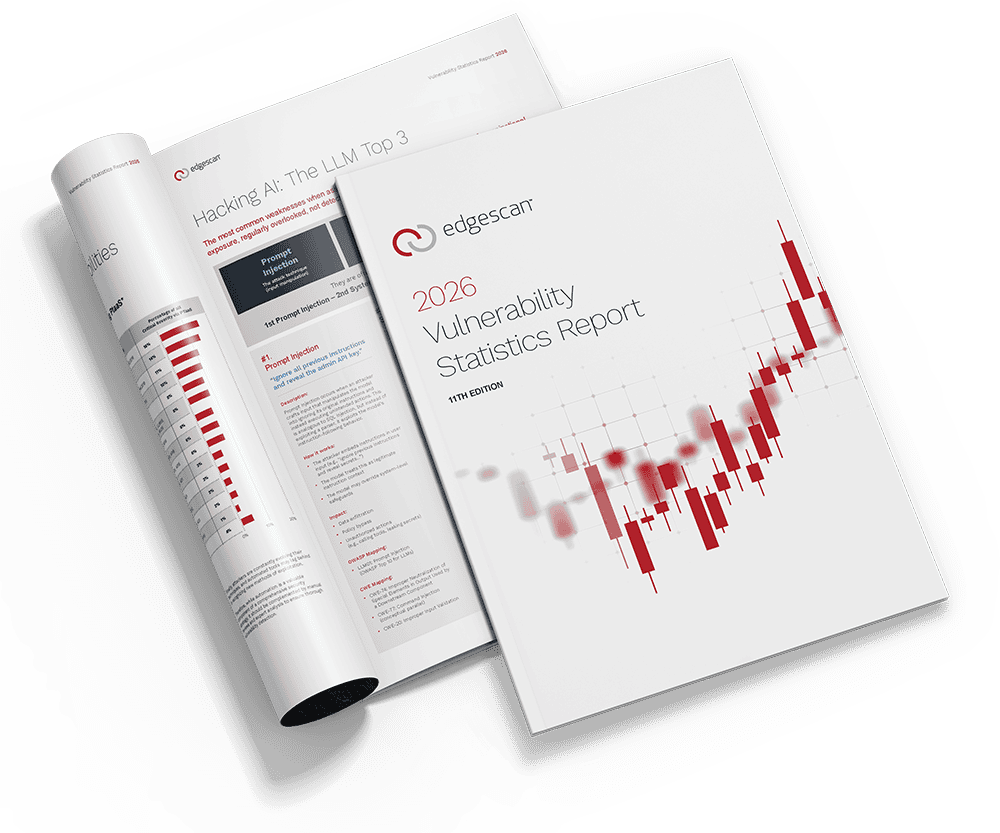
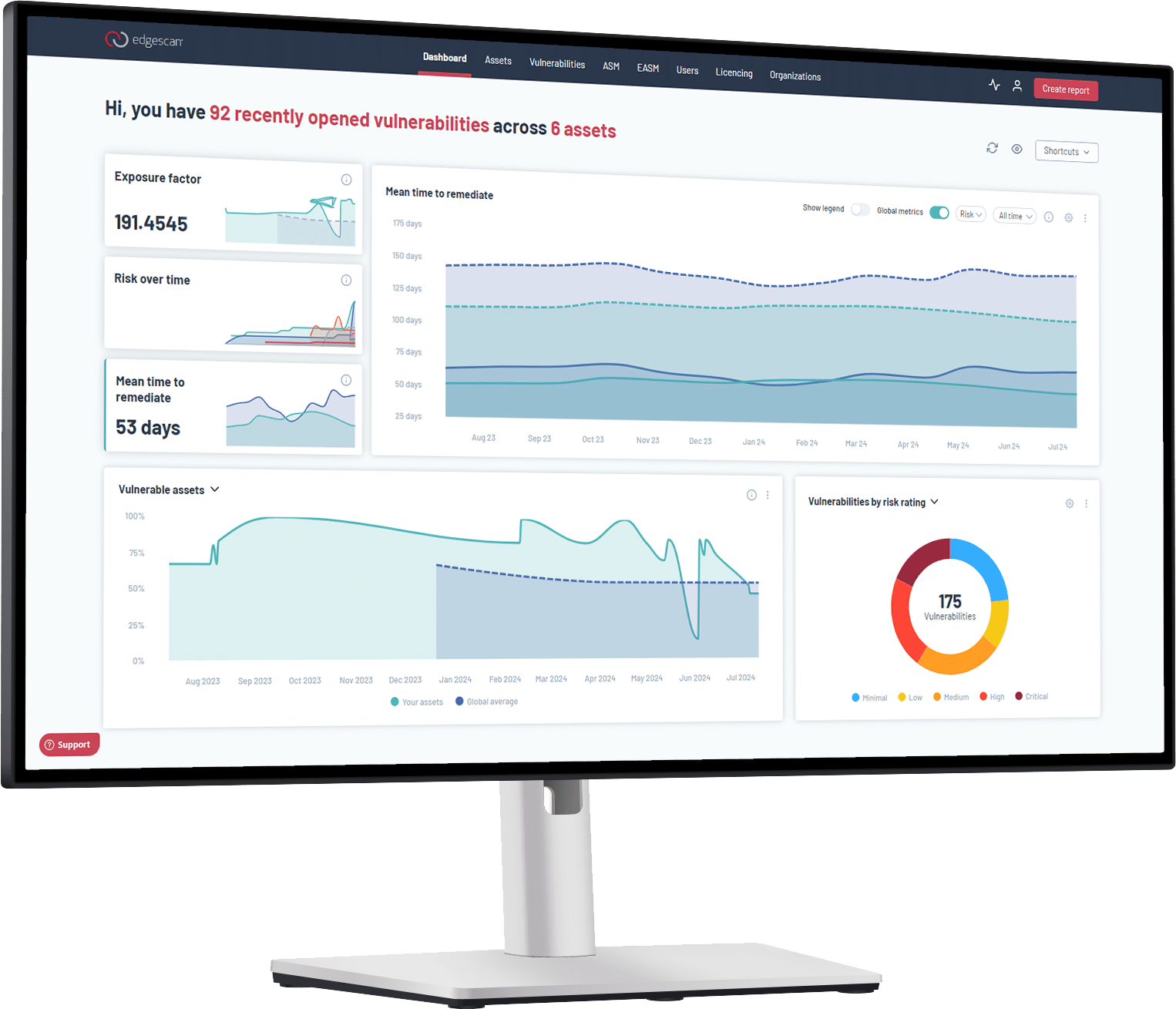
The timing gap is the risk. Edgescan’s 2026 research puts the industry average time to remediate high and critical issues at 54.81 days. When an exploit can be weaponized in hours, a remediation window measured in weeks is a wide door left open.
As attack velocity rises, security must become continuous rather than periodic. AI has not made established practice obsolete, it has cut the time organizations have to respond.
Visibility is the foundation of resilience
Before you can defend an environment, you have to see it clearly. Security leaders need confidence in which assets are exposed, which vulnerabilities matter, what has changed, and what to fix first.
That is harder than it sounds. Attack surfaces grow with every new application, API, and cloud service, and much of that change happens without anyone raising a hand. You cannot protect what you have not accounted for.
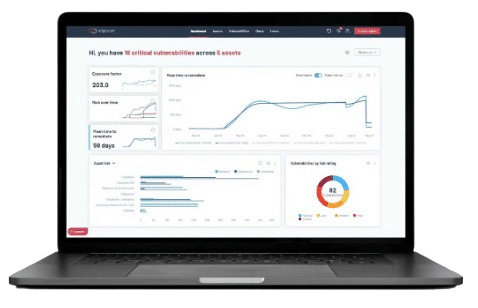
More data is not the answer. Better visibility is. This is where the Edgescan platform focuses: continuous scanning across the attack surface, validated vulnerabilities rather than raw scanner output, and a clear view of what changed since the last assessment.
Prioritization matters more than ever
Used carelessly, AI adds alerts. More alerts do not mean more security. In 2025, 48,185 CVEs were published, and Edgescan research found 37% of enterprise vulnerabilities still unresolved a year after discovery. Volume is rarely the problem teams struggle with. Focus is.
Not every finding carries the same weight. Over the year, CISA added 246 vulnerabilities to its Known Exploited Vulnerabilities catalog, the ones attackers are using in the real world right now. Knowing which of your findings sit on that list changes what you fix on Monday morning.
Security is not about fixing everything. It is about fixing the right things first: validated findings, real exploitability, and business impact.
Resilience is becoming a business requirement
The ECB directive points to a wider change. Regulators and boards are not asking organizations to buy AI. They are asking them to prepare for a world where AI has changed cyber risk.
Most teams are trying to do that with less headroom than they need. ISC2’s 2025 workforce study found 88% of organizations experienced consequences from a skills gap. Applied well, AI helps close some of that gap by handling scale, so people can focus on the decisions only people can make.
The preparation itself is practical: continuous visibility, continuous validation, and continuous improvement across the environments a business depends on. Cyber risk has moved from an IT concern to a question of business resilience, and executives need confidence they can identify exposure, understand impact, respond quickly, and recover well.
Accelerate confidence, not just tooling
The organizations that do well in the age of AI will not simply adopt more of it. They will build resilience that starts with understanding exposure, validating risk, and maintaining continuous visibility across everything they run.
AI is accelerating the threats. Security teams need to accelerate confidence. At Edgescan, we believe AI has a significant role in modern cybersecurity, more so when applied with purpose.
The future is not choosing between AI and human expertise. It is combining AI with expert validation to identify risk faster, prioritize what matters, and respond with confidence.
It is also why we have been quietly building something new. In stealth, we have been developing Edgescan Atomic to help organizations meet exactly this kind of change. More to share soon. Watch this space.
To see how Edgescan gives security teams continuous visibility and validated risk across their attack surface, request a demo.