
Before you fix anything, you make a quiet decision: do you believe this finding. That judgment call, repeated dozens of times a morning, quietly sets the shape of your whole week.
I talk to a lot of security teams, and the ones who’ve stopped trusting their findings tend to describe the same morning. They log into the scanner and lose an hour or two working through noise before they reach anything real. Alerts on ancient servers, issues that have sat there for years, findings where the risk is a grey area that needs more context to rate at all.
None of that context arrives with the finding. So it lands on them to work out, every day, before anyone can act.
For us validation isn’t about reducing report size. It’s about increasing confidence. When security teams trust every finding they receive, prioritization become simpler, remediation accelerates and resources are focused on reducing real cyber risk instead of investigating false alarms.
How you can tell a team has stopped trusting its findings
You don’t hear it in what a team says. You see it in how long things take to fix.
When people don’t trust their findings, remediation slows, because every fix waits behind a re-check. Time to fix is the tell: a backlog growing not because issues are hard to fix, but because nobody’s sure which ones are real.
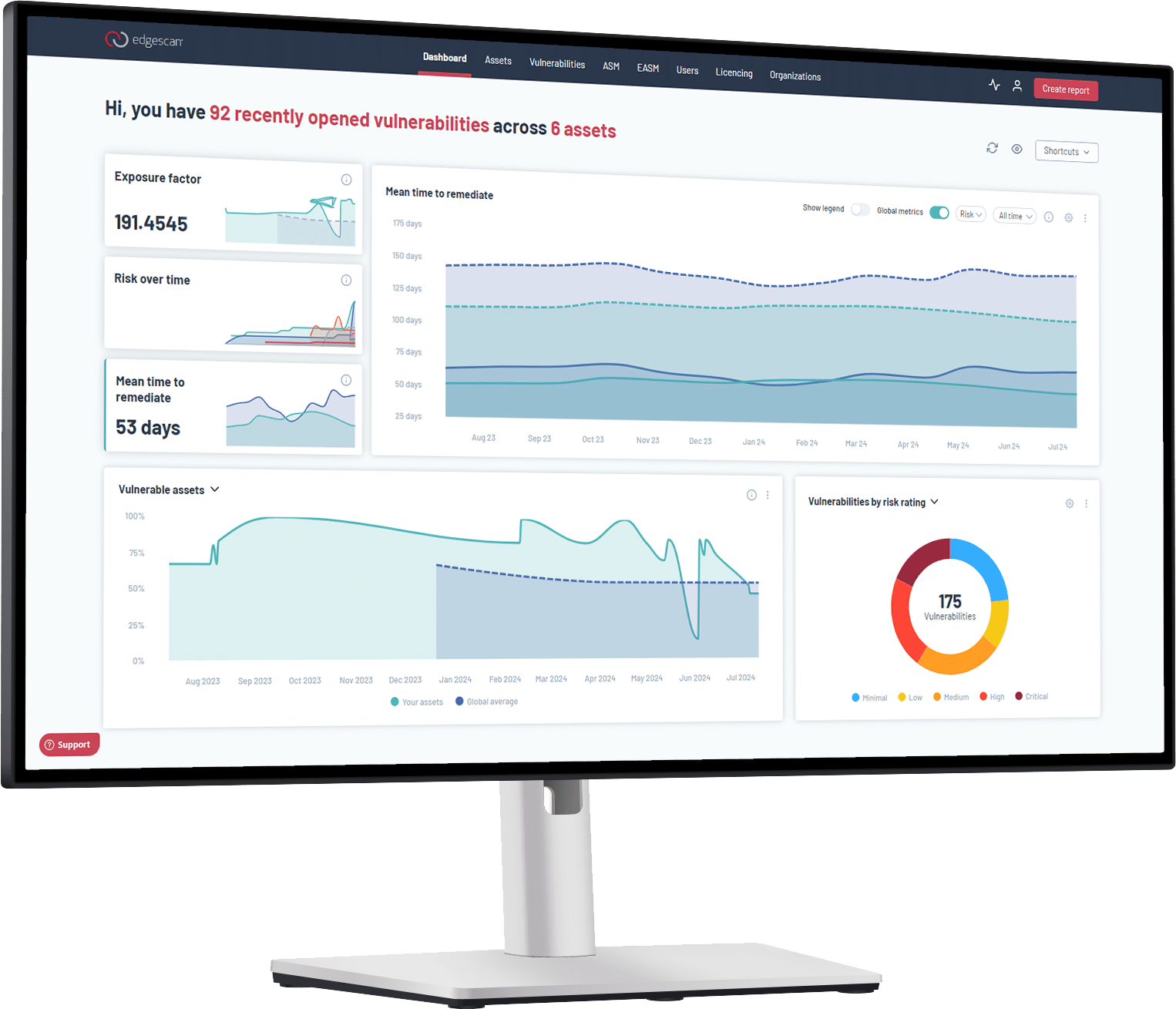
The number worth watching is your own mean time to remediation. The industry average to close high and critical issues sits around 54.81 days. If yours is drifting past that, noise is often the reason, not effort.
At Edgescan, we’ve seen this pattern repeatedly. Security teams rarely struggle because they lack skilled people; they struggle because those people spend too much time proving which findings deserve attention. Reducing that validation effort is often one of the fastest ways to improve remediation performance.
What distrust actually costs
The cost of findings you can’t trust is time, and it’s more measurable than most teams assume.
Someone is re-checking scanner output before anyone acts on it. That’s hours a day, usually from one of your more senior and more expensive people. Put real numbers on it, how many people, how many hours, what a day of their time is worth, and the figure lands higher than most expect.
This isn’t a soft cost. You can put a line-item number on it, and most teams have simply never done the math.
When trust actually breaks
There’s a moment I hear about more than any other, and it’s a breach. Something gets through, the team scrambles to reconstruct how, and it turns out the finding was there all along, buried in the noise under everything that turned out to be nothing.
That’s when trust breaks for good. Not because the signal was missing, but because it couldn’t be seen through the volume around it. The lesson teams take from it is blunt: finding the issue was never the hard part. Surfacing it above the noise was.
What has to be true before you act on a finding
So what makes a finding trustworthy enough to act on without re-checking it yourself? A person has to have looked at it. Not an algorithm reporting its confidence, a human who confirmed it’s real.
But the part that actually changes behavior is what comes attached. The finding should show its working: how it was found, how it was confirmed as a real vulnerability, and how to fix it. That’s the difference between a generic scanner flag and something you can hand a developer and act on today.
And it has to be clear enough that when someone asks “how do we know,” the answer is a straight account of how it was validated, not “the scanner said so.” When a finding shows its working, the re-check disappears, and so does the delay.
This is why validated findings sit at the center of the Edgescan platform. Every confirmed fundability is backed by evidence., context and expert validation, giving security teams, confidence that the issue is real, actionable and ready for remediation.
How to tell whether you can trust a vendor’s findings
If you’re evaluating a vendor, three questions separate real validation from a marketing line.
Ask exactly who validates a finding and what their background is. Certifications like CREST and OSCP tell you whether a qualified person actually stands behind the result. Ask to see a real sample report, not a case study, an actual finding as it would land on your desk. And ask what happens when you flag something as wrong, and how fast it gets corrected, because that tells you whether validation is a working process or a claim.
The answers separate vendors who’ve done the thinking for you from those handing you a longer list to sort yourself.
The takeaway
Trust isn’t something you extend to a tool. It’s earned, finding by finding, by whether each one shows its working and holds up when you ask how it was proven.
So the question isn’t whether your stack can find vulnerabilities. It’s whether you believe what it tells you enough to act, or whether you’re quietly re-checking its work every morning. One of those is a security program. The other is a full-time job you didn’t apply for.
To see what a validated finding looks like when it reaches your team, book a demo.