

Practical steps to prepare for what’s coming, whatever your AI investment looks like today.
AI isn’t going away. The threat landscape is accelerating, and it’s going to keep changing.
Attackers are moving faster. Discovery, weaponisation, chaining, exploitation — all of it is compressing. The Mythos generation of models is pushing that further, and the next generation will push it further again. This is the direction of travel, and security teams need to plan around it.
You may already be using AI in your security stack. You may not. Either way, the question facing most teams isn’t whether to write a seven-figure cheque for AI infrastructure to keep up. It’s whether your fundamentals are strong enough to absorb a faster, smarter attack environment.
Because they can be. Preparing for a changing threat landscape doesn’t require matching attackers tool for tool. It requires closing the gaps they’ll find anyway — faster, more consistently, and with better priorities than they have.
This is the runbook for that.
Where the pressure is coming from
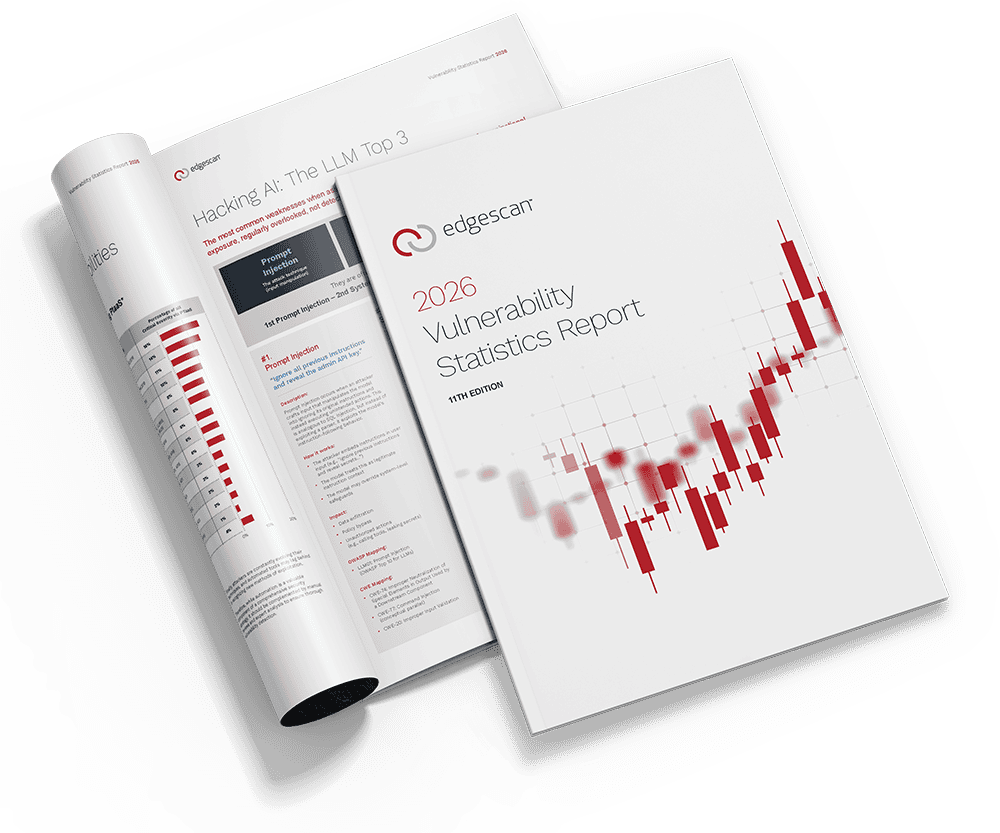
The numbers are blunt. 48,185 CVEs were published in 2025, a new record. The 2026 Edgescan Vulnerability Statistics Report shows the average time to remediate a vulnerability with a known exploitation probability (EPSS > 0.1) is still 210 days. 37% of vulnerabilities in large enterprise environments remain unresolved after 12 months.
That’s not a discovery gap. That’s an execution gap. And AI-powered attackers don’t need a discovery breakthrough to win against an execution gap that wide. They just need to keep showing up.
The good news: the levers that close that gap haven’t changed. They’ve just become more urgent. And they’re achievable regardless of where you are on your own AI journey.
Phase 1: Reduce the surface (0–30 days)
The fastest way to lose ground in a faster attack environment is to defend assets you didn’t know you owned.
Start with full visibility. Catalogue every web app, every API, every internal and external endpoint, every version and dependency. Then start cutting. Disable old API versions, debug modes, and exposed management interfaces. If it doesn’t need to be reachable, it shouldn’t be reachable.
Edgescan’s Attack Surface Management and API Security Testing modules do this discovery automatically across cloud providers, surfacing rogue and forgotten APIs that don’t show up in internal asset lists. You can’t protect what you can’t see, and shadow assets are where breaches start.
Once you can see it, patch what matters. Not everything — what matters. Prioritise CVEs with public exploits, high EPSS scores, or entries in the CISA KEV catalogue. By the end of 2025, KEV held 1,484 entries with 246 added that year alone. Those are the ones being used right now against organisations like yours.
Reach for the basics that still work: server-side input validation, parameterised queries, output encoding, least privilege. None of this is new. All of it still stops the most common breaches.
Tighten authentication and access controls in parallel. Phishing-resistant MFA. Properly validated OAuth 2.0 / OIDC. Server-side authorisation checks to close BOLA and IDOR. Rate limiting and CORS via your API gateway. If an attacker can guess their way in, an AI can guess faster.
And start logging. Authentication events, access denials, anomalous inputs, repeated failures, traffic spikes. Rule-based alerting is enough at this stage. The point is to know when something is going wrong, not to build a SOC overnight.
Target: full asset inventory complete by day 30, with high and critical internet-facing issues patched or mitigated within seven days of discovery.
Phase 2: Embed the process (30–90 days)
Visibility and patching get you out of the worst position. Process keeps you out of it.
Make OWASP Top 10 (Web) and the OWASP API Security Top 10 part of code review and architecture sign-off. Not as a checklist for compliance, as a baseline expectation. The same vulnerability classes have been in the top 10 for over a decade. Teams that treat the list as table stakes ship fewer of them.
Build a testing cadence that runs alongside development, not after it. Dynamic testing in pipelines. Monthly manual reviews of critical apps and APIs. Lightweight penetration testing on high-risk changes. Edgescan’s PTaaS approach — automation for scale, AI for speed, human testers for context — is designed for exactly this rhythm, with validated findings and clear remediation guidance rather than raw scanner output.
Layer in abuse controls. Token buckets. Per-user and per-IP rate limits. CAPTCHA where the user experience can absorb it. When findings emerge, generate WAF rules from them and use virtual patching to close the window while engineering works on the proper fix.
Don’t forget the supply chain. Maintain SBOMs. Audit third-party libraries on a real cadence, not when something breaks. Deprecate old API versions aggressively. The longer a forgotten dependency lives in production, the more likely it is to become someone else’s foothold.
Target: every code change passing a security checklist review by day 90, mean time to remediate for high-severity issues under 14 days.
Phase 3: Hold the ground (90+ days)
Long-term resilience is about repeatability. Doing the same things, well, every week.
Run weekly triage. Track vulnerability age, exposure factor, remediation rate, and how many high-severity issues are closing inside SLA. Don’t track everything. Track the few metrics that tell you whether the programme is getting better or worse.
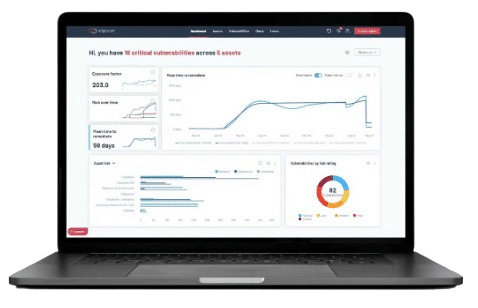
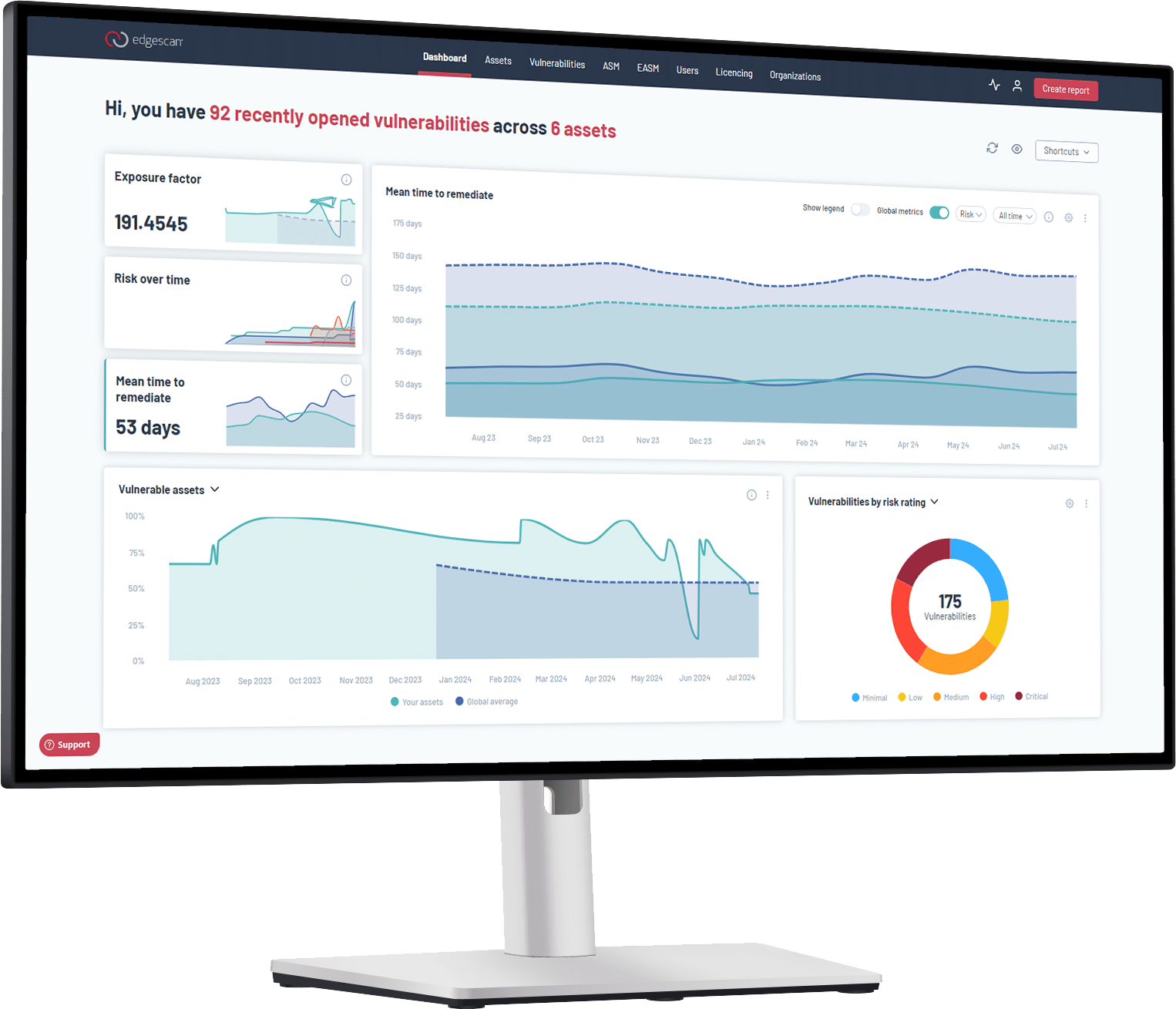
This is where Edgescan’s unified platform earns its place: continuous coverage across web, API, network, and mobile, with risk scoring that combines CVSS, EPSS, KEV, ransomware campaign data, and asset context through our AI Insights and EXF scoring. Validated findings, no false positives, unlimited retests. That last part matters more than it sounds. When retesting is free, “I’ll verify the fix” stops being an act of optimism.
Pair that with proper defence-in-depth. WAF and gateway controls. Schema validation at the API layer. Immutable backups with quarterly restore testing — because the assumption is no longer if, it’s when.
Then build the response muscle. A real incident response playbook with detection, containment, eradication, recovery, and a post-incident review that actually changes something. Quarterly tabletop exercises simulating fast zero-day chains — the kind AI-accelerated attackers are now capable of running end-to-end.
Finally, train the people. Free OWASP and Edgescan resources are available. Reward secure practice in sprints. The teams that resist a fast attacker aren’t the most expensive ones. They’re the ones where good security behaviour is the default.
What to measure
Four KPIs cover most of what leadership needs to know:
- Percentage of assets inventoried. If it’s not 100%, that’s the priority.
- Mean time to remediate. Especially for high and critical severity issues with known exploitation signals.
- Percentage of critical issues closed within SLA. Volume isn’t the story. Cycle time is.
- False positive rate on scans. High false positives erode the entire programme. They’re not a tooling annoyance, they’re a strategic problem.
Report on these monthly. Align them to PCI, SOC 2, NIS 2, or whichever frameworks apply. Validated findings make compliance reporting faster and more credible at the same time.
Prepared, whatever comes next
AI will keep reshaping how attacks are built and delivered. The threat landscape will keep accelerating. That’s the floor, not the ceiling.
What it doesn’t change is what makes organisations defensible. Inventory, hygiene, validated prioritisation, consistent remediation. Whatever AI capability you have in your stack today, and whatever you add later, sits on top of that foundation. Get the foundation right, and you’re ready for the next shift in the threat landscape, whichever direction it takes.
To see how Edgescan’s continuous testing and validated risk scoring works in practice, request a demo.