

Unfinished security work doesn’t reset when the calendar changes. Vulnerabilities left open through 2026 will still be open in January. So will the fixes nobody verified and the assets nobody tested.
Edgescan’s 2026 Vulnerability Statistics Report calls the pattern on internal systems “widespread internal technical debt.” The term fits most security programs. Left unmanaged, the debt can become harder to fix as applications change and outdated components become harder to replace. Here’s where security debt tends to sit, when an old finding turns into a bigger problem, and what you can realistically address before the year ends.
How much gets carried forward
In enterprises with 1,000 or more employees, an average of 37% of vulnerabilities discovered in a 12-month period remain open. Of that backlog, 19% is high or critical severity.
The report is clear that fixing everything isn’t practical. Its advice is to prioritize risk and fix what matters. So the real question is what sits inside the 37%. Some lower-risk findings may reasonably stay open with a documented decision and a review date. The priority is knowing which unresolved issues leave you exposed and who owns the next step.
Where security debt hides
Old vulnerabilities that never left. On internet-facing systems, CVEs published in 2002 made up 7.79% of validated CVEs in Edgescan’s 2026 data. CVEs from 2015 made up 8.79%. Internal systems showed a large share from 2016 to 2022, with some dating back to 1999. old CVEs are a reason to investigate what’s still running. Whether it’s supported and what’s stopping an upgrade, the report highlights replacing or upgrading end-of-life components as a priority for reducing risk.
Fixes nobody verified. Closing a ticket doesn’t prove the vulnerability is gone. A ticket marked resolved means someone believes the issue is fixed. Until it’s retested, nobody has confirmed it. Partial fixes, fixes applied in one environment but not another, and fixes undone by a later release all look closed in a tracker.
Findings that keep coming back. When the same issue reappears release after release, look beyond the individual fix. Each repeat costs triage time and developer attention. And it usually points to a pattern in how code is written or deployed.
Assets outside the testing program. Some debt is what was never tested at all. Applications launched mid-year, APIs built for one project, and test environments nobody took down often sit outside the inventory. That puts them outside the testing plan too.
When an old finding becomes a bigger problem
A finding’s risk can change after it’s logged.
Exploitation evidence appears. A vulnerability with low exploit likelihood when it was found can land in CISA’s Known Exploited Vulnerabilities catalog months later. About 6.2% of vulnerabilities discovered in 2025 were linked to ransomware campaigns.
The asset changes. An internal service exposed to the internet, or an application that starts handling payment or personal data, raises the impact of every open finding on it, as the opportunities for exploitation or the consequences may have changed.
Findings combine. Two medium-severity issues on the same application can chain into a high-impact attack path neither represents alone.
The data shows how long risk can sit even when teams know it’s there. High and critical vulnerabilities with an EPSS score above 0.7, the ones most likely to be exploited, took an average of 134.3 days to fix. Those below 0.1 took 210 days. The report finds that prioritization still leans more on traditional CVSS scores than on exploit likelihood or KEV status. That helps explain why both windows are long.
What you can address before year-end
You may not clear the backlog before the end of the year But it’s enough time to make the debt you carry forward smaller and better understood.
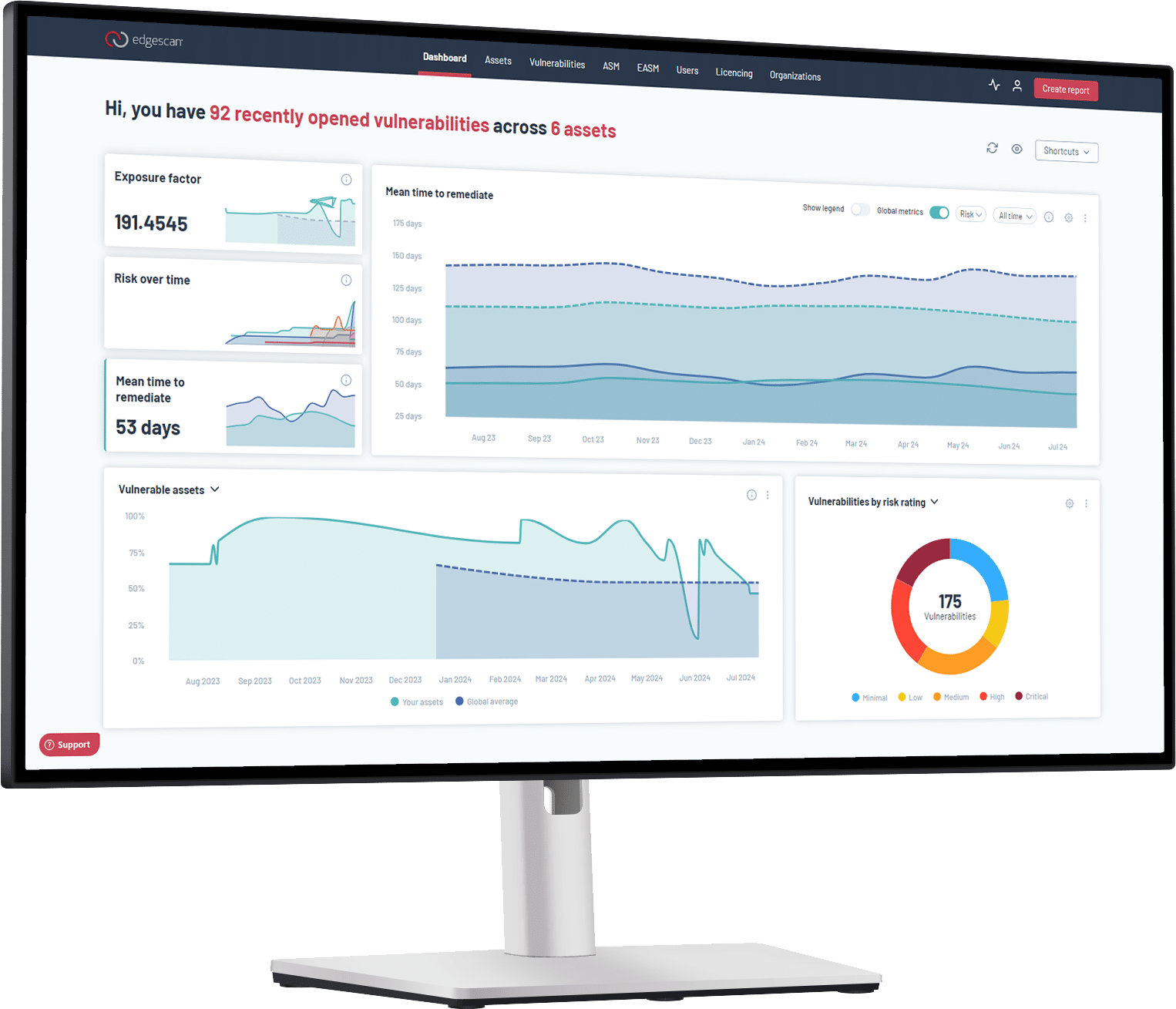
Re-rank what’s open. Review high and critical findings against current exploitation data, including EPSS and CISA KEV, and against how each asset is used today. Some findings will move up. Others can be accepted with a documented reason. Edgescan’s eXposure Factor (EXF) combines these scores to help teams decide which findings to fix first.
Retest what’s marked fixed. Start with high and critical findings closed in 2026. A retest is a targeted check against a known issue. It turns an assumption into evidence. Edgescan customers can retest any vulnerability on demand.
Look for repeat offenders. Group recurring findings by type and application. A few root causes may account for much of the volume. Those are strong candidates for a 2027 fix.
Check the inventory. Compare what’s in your testing program against what’s exposed. Anything missing goes into the 2027 plan.
Write down what you’re carrying. Debt that’s documented, owned and ranked is far easier to manage than debt you discover during an incident.
Carrying less into 2027
Every security team carries some debt into a new year. The goal is to know what it is, why it’s there and which items matter most.
That depends on findings you can trust and a current view of what’s actually been fixed. Edgescan validates findings before they reach your team.
Between expert-led engagements, Edgescan Atomic adds on-demand autonomous testing, including retests of previous findings to confirm whether they’re still exploitable.
Start 2027 with a backlog you can trust. See how Edgescan validates, prioritizes and retests the vulnerabilities that matter.