


Data protection has moved from compliance requirement to board-level concern. In 2026, CISOs face increasing pressure to demonstrate how security investments reduce business risk, protect customer trust, and align with regulatory obligations that carry material financial consequences.
The question isn’t whether data protection matters. It’s whether your organisation can prove it’s managing data protection risk effectively – before regulators, customers, or attackers force the conversation.
The Regulatory and Financial Reality
Data protection regulations now carry enforcement teeth that impact balance sheets directly. GDPR fines reached €4.5 billion across enforcement actions in 2023, with individual penalties regularly exceeding €50 million for inadequate data protection measures. The UK’s ICO imposed fines totalling £42.5 million in 2024 alone.
But regulatory fines represent only direct costs. IBM’s 2024 breach cost analysis shows the average data breach costs $4.88 million globally, with detection and escalation consuming significant portions. For breaches involving personally identifiable information (PII), costs escalate further due to notification requirements, credit monitoring obligations, and reputation damage.
Healthcare organisations face the highest breach costs – regularly exceeding $10 million – precisely because they handle sensitive personal data under strict regulatory frameworks. Financial services follow closely, with average breach costs approaching $6 million.
These aren’t hypothetical scenarios. They’re quarterly board discussions when breaches occur.
From Compliance Checkbox to Strategic Risk Management
Many organisations treat data protection as a compliance exercise: encrypt databases, implement access controls, complete annual audits. This approach satisfies immediate regulatory requirements but misses strategic risk management.
Data protection becomes strategic when it informs:
Business Decision-Making: Which markets to enter, which customer data to collect, which third-party integrations to accept – all based on quantified data protection risk.
Resource Allocation: Where to invest in security capabilities based on actual data exposure rather than generic compliance frameworks.
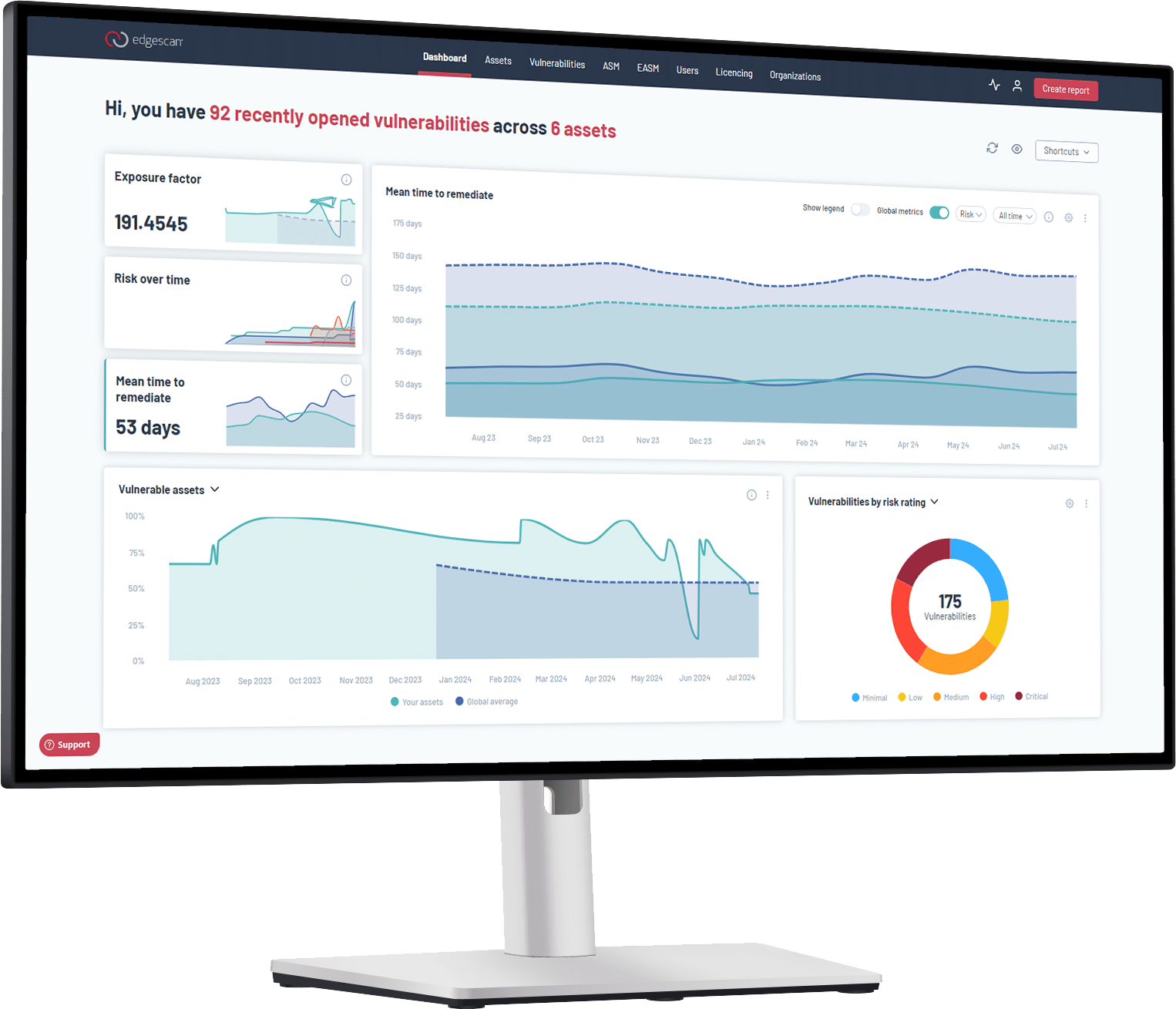
Executive Risk Reporting: Clear communication to boards about data protection posture, exposure levels, and mitigation progress using metrics executives understand.
Customer Trust: Demonstrable data protection practices that differentiate in markets where privacy awareness drives purchasing decisions.
The difference between compliance and strategy shows up during incidents. Compliance-focused organisations scramble to meet notification deadlines and contain damage. Strategy-focused organisations already have quantified exposure, documented controls, and board-level awareness of data protection posture.
Understanding Your Data Exposure
Effective data protection requires understanding what data exists, where it lives, and how it’s exposed to risk.
According to Edgescan’s 2025 Vulnerability Statistics Report, 14.8% of web application and API vulnerabilities are critical or high severity. Many of these vulnerabilities directly enable data exposure – SQL injection (28.28% of critical application vulnerabilities), broken access controls, and API authentication flaws that permit unauthorised data access.
But data exposure isn’t just technical vulnerability. It’s business risk quantified by:
Data Sensitivity: PII, financial records, health information, intellectual property – each carries different regulatory obligations and breach costs.
Access Pathways: Applications, APIs, databases, backups, third-party integrations, employee endpoints – any path that exposes data to potential compromise.
Remediation Timelines: Edgescan’s data shows organisations average 74.3 days to remediate critical application vulnerabilities. During those 74 days, data remains exposed. For large enterprises, 45.4% of discovered vulnerabilities remain unresolved after 12 months.
Attack Surface Evolution: Cloud migration, API proliferation, and third-party integrations constantly create new data exposure points. Point-in-time assessments miss these changes.
Strategic data protection requires continuous visibility into these factors, not annual audits that snapshot exposure at a single moment.
Aligning Data Protection with Executive Risk Reporting
Boards understand financial risk, operational risk, and reputational risk. Technical vulnerability reports don’t translate directly into these categories.
Effective executive risk reporting for data protection requires:
Quantified Exposure: “We have 127 critical vulnerabilities” means nothing to boards. “Our payment processing APIs have three critical authentication flaws, each capable of exposing 2.3 million customer payment records, representing approximately £15 million in potential regulatory fines and breach costs” drives decisions.
Business Context: Map data protection vulnerabilities to business units, revenue streams, and customer segments. “The customer portal has SQL injection vulnerabilities affecting our three largest enterprise clients” focuses attention better than generic risk scores.
Trend Analysis: Show whether data protection posture is improving or degrading. “Critical data exposure vulnerabilities decreased 34% this quarter through API security improvements” demonstrates programme effectiveness.
Comparative Risk: Benchmark against industry standards and peer organisations. “Our mean time to remediate data exposure vulnerabilities is 52 days versus industry average of 74 days” provides context boards understand.
Third-Party Risk: Quantify data protection risk introduced through vendor relationships, cloud services, and partner integrations. Supply chain attacks increasingly target data through vendor access.
This level of reporting requires security programmes built for continuous assessment and business risk translation, not compliance-only frameworks.
The Technology Foundation: Continuous Threat Exposure Management
Strategic data protection aligns closely with Continuous Threat Exposure Management (CTEM) frameworks. Gartner’s research quantifies that organisations prioritising security investments through CTEM programmes will realise a two-thirds reduction in breaches by 2026.
CTEM provides the operational foundation for strategic data protection:
Discovery: Continuous asset identification including APIs, cloud workloads, and third-party integrations that process sensitive data.
Assessment: Ongoing vulnerability scanning and penetration testing focused on data exposure pathways – application vulnerabilities, API authentication flaws, database misconfigurations.
Validation: Expert verification of findings to eliminate false positives that waste remediation resources. Edgescan’s hybrid validation approach – 92% automated analysis with 8% requiring expert human review – ensures teams work on real data protection risks.
Prioritisation: Risk-based ordering using frameworks like EPSS, CISA KEV, and business impact analysis. Not all vulnerabilities threaten data equally.
Remediation: Systematic vulnerability resolution with validation that fixes actually work, measured by MTTR reduction and backlog management.
This continuous cycle enables the executive risk reporting boards need: current data protection posture, exposure trends, remediation progress, and quantified risk reduction.
Building the Business Case
CISOs face competing budget priorities. Building the business case for strategic data protection investment requires translating technical capabilities into business outcomes:
Avoided Breach Costs: Use IBM’s $4.88 million average global breach cost as baseline. Factor in your organisation’s data volume, regulatory environment, and customer sensitivity. Calculate expected loss reduction from improved data protection.
Regulatory Risk Reduction: Map current data protection gaps to specific regulatory obligations (GDPR, CCPA, sector-specific regulations). Quantify potential fines for non-compliance. Compare investment costs to potential penalties.
Operational Efficiency: Demonstrate how validated vulnerability intelligence reduces time wasted on false positives. Calculate engineering hours saved when security teams provide accurate, prioritised data protection risks rather than overwhelming vulnerability lists.
Customer Trust: For organisations where privacy awareness drives purchasing decisions, demonstrate competitive differentiation through superior data protection practices. This particularly matters in healthcare, financial services, and enterprise SaaS.
Insurance Implications: Cyber insurance premiums increasingly reflect demonstrated security capabilities. Improved data protection posture may reduce premiums or improve coverage terms.
The business case strengthens when security programmes deliver measurable outcomes: reduced MTTR, lower vulnerability backlogs, faster remediation of critical data exposure risks, and clearer executive risk visibility.
Practical Steps for 2026
Strategic data protection requires operational capabilities:
Implement Continuous Data Exposure Assessment: Move beyond annual audits to ongoing visibility into data protection vulnerabilities across applications, APIs, and infrastructure.
Prioritise Based on Data Sensitivity: Not all vulnerabilities threaten sensitive data equally. Focus remediation on exposures that enable unauthorised access to PII, financial data, or regulated information.
Establish Executive Risk Metrics: Define and track KPIs boards understand – quantified data exposure, MTTR for critical data vulnerabilities, percentage of sensitive data behind validated controls.
Integrate Third-Party Risk: Extend data protection assessment to vendor relationships, API integrations, and cloud service providers that process your sensitive data.
Validate Findings: Ensure vulnerability reports represent real data exposure risks, not false positives. Expert validation eliminates noise that undermines security team credibility.
Automate Where Possible: Leverage continuous scanning, automated asset discovery, and integrated remediation workflows to handle scale efficiently while preserving expert analysis for complex data protection scenarios.
Moving Forward
Data protection in 2026 isn’t about compliance checkboxes. It’s about strategic risk management that protects business value, maintains customer trust, and provides boards with the visibility they need to govern data protection risk effectively.
The regulatory environment will only intensify. Customer expectations around privacy will only increase. Attack sophistication targeting valuable data will only improve.
CISOs who position data protection as strategic priority – with continuous visibility, quantified risk, and clear executive reporting – will navigate 2026 from positions of strength. Those treating it as compliance exercise will navigate from positions of reaction.
The technology foundation exists: continuous assessment platforms, validated vulnerability intelligence, risk-based prioritisation, and business impact translation. The strategic question is whether your organisation leverages that foundation before regulators or attackers force the conversation.
Ready to build strategic data protection capabilities? Start here.