


Samuel Beckett once wrote: “Ever tried. Ever failed. No matter. Try again. Fail again. Fail better.”
In security, “failing better” means learning from noisy tools, blind spots and missed exposures – and deliberately building something smarter: validated vulnerabilities, full-stack visibility, integrated attack surface management, and real API discovery.
Choosing not to move to that kind of model doesn’t leave you where you are – it locks you into a way of working that can’t scale: entrenched false positives, low visibility, patchy coverage and terrible prioritisation.
1. Accepting False Positives Instead of “Failing Better”
Most legacy vulnerability programmes live in a Beckett loop: scan, drown in false positives, burn time, repeat. You “fail again”, but you don’t “fail better”.
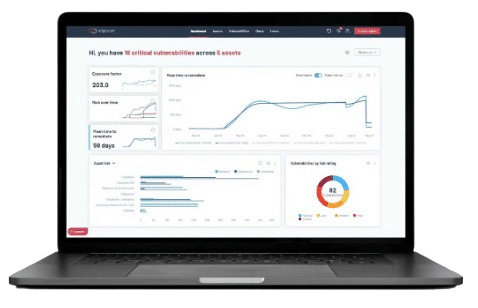
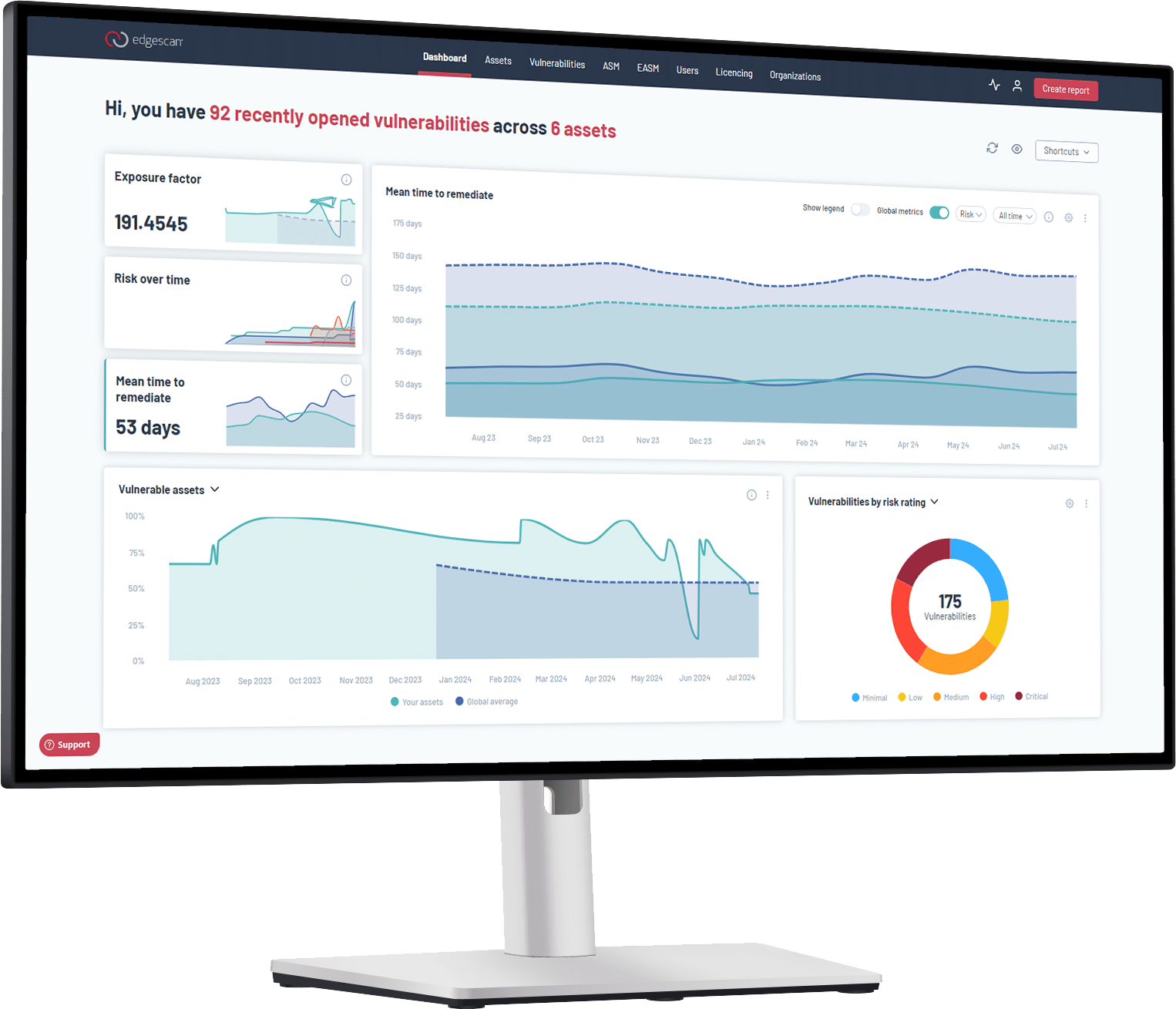
Edgescan’s platform is explicitly designed to break that cycle. The core proposition is near 100% false-positive-free, validated vulnerability intelligence – automated testing backed by human verification from dedicated penetration testers, presented in a single dashboard.
If you don’t adopt a validated approach like this, you’re signing up for:
Permanent alert fatigue: Engineers triage issues that never reach exploitability in the real world.
Eroding trust in security data: Development and operations teams start treating scanner output as background noise.
Slow, expensive remediation: Every false positive steals time from real vulnerabilities.
Edgescan’s approach emphasises contextualised, validated risk – including proprietary risk and breach ratings – to ensure teams can focus on what matters first.
Refusing that model is like insisting on Beckett’s void without his wisdom: you keep failing, but you never “fail better”.
2. Fragmented Tools vs. Unified Full-Stack Coverage
Modern attack surfaces aren’t neat or homogeneous: they span internet-facing infrastructure, cloud, apps, APIs, mobile, hosts and legacy systems. Edgescan’s positioning is clear: one unified platform that combines network, host and web application vulnerabilities in a single dashboard, with validated and risk-rated results that provide a single source of truth.
The full-stack approach explicitly uses hybrid verification across every layer of the stack – vulnerabilities are verified by humans so threats across infrastructure, apps and APIs are real, free of false positives, and visible together.
- If you stay with fragmented tools instead of an integrated full-stack platform:
- Each scanner sees only its own slice of the stack
- The same underlying issue may emerge as multiple tickets from multiple tools with no clear ownership
- There’s no authoritative, risk-rated view that says “this is the one vulnerability that actually matters right now”
An old Irish proverb warns: “You will never plough a field by turning it over in your mind.” You don’t secure a full stack by thinking in silos and mentally stitching them together; you secure it by actually consolidating discovery, validation and reporting into a single, integrated platform, and acting on that.
3. No Integrated ASM = Baked-In Blind Spots
You can’t fix what you can’t see. Edgescan’s External Attack Surface Management (EASM) was built around exactly that reality: solving the problem of “you can’t secure what you can’t measure or see” by providing immediate visibility of an enterprise’s internet-facing estate, then continuously monitoring the attack surface as it evolves and changes.
The ASM approach includes:
- Automatic asset discovery and mapping from something as simple as a domain name, building out your external footprint
- Continuous identification of related domains, subdomains, DNS records and associated services to illuminate your true online presence
If you don’t plug this kind of ASM into your vulnerability programme, you’re effectively choosing:
Low visibility by design: Shadow IT, forgotten subdomains and legacy services remain unknown.
Point-in-time understanding: Spreadsheets, ad-hoc inventories and occasional scans never keep up with cloud and DevOps change.
High, unmanaged perimeter risk: Attackers will always find your weakest or least monitored exposure first.
Irish history has a clear lesson here. Terence MacSwiney, Lord Mayor of Cork, wrote during the struggle for independence:
“It is not those who can inflict the most but those who can endure the most who will conquer.”
Enduring in security doesn’t mean stoically accepting blind spots; it means committing to continuous visibility – enduring the work of discovery, correlation and validation at the attack surface, because that’s where real battles are won or lost.
4. Ignoring API Discovery and Testing = A Critical Coverage Gap
APIs are now some of the highest-value, highest-risk components in most architectures. Edgescan treats API security as a first-class part of the platform:
- API Security Testing combines discovery with testing, protecting critical APIs through automation and human expertise
- Effective API security includes discovery, posture assessment and vulnerability testing, ensuring connections between systems are safe and scalable
- API Security Testing as a Service aligns with OWASP API Testing methodologies and integrates as part of Continuous Threat Exposure Management (CTEM)
Without integrated API discovery and testing, three bad things happen:
Unknown APIs: Shadow, deprecated and “temporary” APIs remain untracked and untested.
Partial API coverage: Testing relies on whatever your teams remember to document.
Broken risk picture: You can’t easily see how an exposed API interacts with other exposed assets in your attack surface.
This is another case of ploughing the field only in your mind. You might believe your app is secure because the UI and a handful of endpoints have been scanned, but the undocumented APIs – the real soil – remain untouched. Again, “You will never plough a field by turning it over in your mind.”
Edgescan’s API approach is the opposite: discover, map and test APIs in the same unified, validated, full-stack context as everything else.
5. Poor Prioritisation When Risk Isn’t Unified
Even if you can find vulnerabilities, the critical question is: what do we fix first?
The Edgescan platform approach prioritises validated, risk-rated intelligence:
- Contextualised risk with false-positive-free validated vulnerability intelligence, standard scoring systems and proprietary validated risk and breach ratings to prioritise the most important vulnerabilities first
- Foundation for Continuous Threat and Exposure Management (CTEM) – from discovery through prioritisation to remediation
- Network and full-stack coverage combined with risk ratings so organisations can genuinely understand their attack surface and focus remediation where it will reduce exposure fastest
Avoiding that kind of unified risk model leaves you with:
- Flat CVE lists, ordered by generic CVSS, detached from asset criticality and exploitability
- Multiple backlogs generated by different scanners with no global view of “what actually matters this week”
- Critical issues buried in a heap of unvalidated noise
An Irish proverb says, “Perseverance is the mother of good luck.”
In vulnerability management, “good luck” is rarely luck at all. It’s the compounded effect of continuously discovering assets, validating findings, and rigorously prioritising remediation based on real risk. A platform that keeps all of that in one place enables perseverance; a sprawl of uncoordinated tools simply doesn’t.
Choose Your Failures – And Your Battles
Beckett gave us the language; security gives us the stakes. If you stick with noisy scanners, fragmented coverage, no ASM and ad-hoc API testing, you’re choosing to:
Fail the same way, over and over: Drown in false positives instead of demanding validated vulnerabilities.
Fight with a blindfold on: Accept low visibility at the attack surface by skipping integrated EASM/ASM.
Leave your most exposed assets undefended: Allow APIs and other modern entry points to fall outside your systematic coverage.
Spend your energy on the wrong battles: Prioritise based on tool noise instead of unified, risk-driven intelligence.
The alternative is to treat failure the Irish way: as something you use rather than something you repeat. Beckett’s challenge – “Try again. Fail again. Fail better.” – fits perfectly here: move from raw scanning to validated full-stack coverage, integrated ASM and continuous API discovery, so each iteration of your programme is a step towards less noise, more visibility, better coverage and sharper prioritisation.
And if this feels like a long road, MacSwiney’s words are a reminder of what wins in the end:
“It is not those who can inflict the most but those who can endure the most who will conquer.”
In security, endurance means committing to the harder but more meaningful work: a single, integrated, validated platform that sees your whole attack surface and helps you fix what really matters. Not taking that path isn’t just a missed opportunity – it’s a decision to keep failing in all the old ways, exactly where you can least afford it.
Ready to Fail Better?
Edgescan’s unified platform delivers what fragmented tools can’t: validated, false-positive-free vulnerability intelligence across your full stack – web applications, APIs, networks, and cloud infrastructure. With integrated Attack Surface Management, continuous assessment, and AI-driven prioritisation using EPSS, CISA KEV, and proprietary risk ratings, you get a single source of truth for what actually matters.
Our CREST and OSCP-certified experts validate every critical finding. Unlimited DAST and unlimited retesting are built in. And everything – from discovery to remediation – lives in one dashboard designed for Continuous Threat Exposure Management (CTEM).
Stop repeating the same failures. Start failing better. Start here.