

You’ve sat through the 40-slide vendor deck before. Somewhere around slide six you quietly checked out, because you were being walked through a feature list before anyone had told you why any of it mattered to you.
I’ve sat on the other side of hundreds of those calls. The pattern is consistent: the demo-first approach asks a security leader to absorb twenty minutes of capabilities before hearing the one idea that reframes how they’d see any of it. By the time you reach the point, the room has already gone.
This isn’t an argument against demos. Plenty of technical buyers want to see the platform, and they should. It’s an argument about order, and about what a first conversation is actually for.
What security leaders actually want from a first call
The thing security leaders want first isn’t a capability list. It’s honesty about where a product’s edges are, what it does and, just as importantly, what it doesn’t.
The questions I hear most are some version of “how do you cut down false positives at scale” and “who’s validating findings, and how fast.” Those aren’t requests for a polished pitch. They’re requests for someone who’ll name the limits without getting defensive about them.
A vendor who states their own edges is easier to trust than one who claims to do everything. Scope honesty early is what lets the rest of an evaluation move quickly, because nobody’s relitigating something that was oversold on the first call.
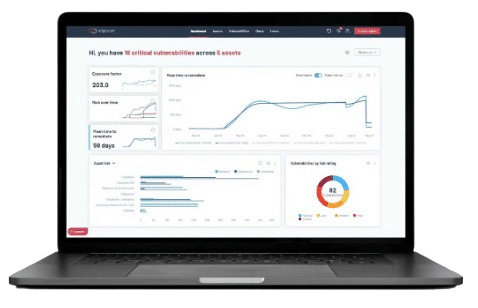
This is the approach we take at Edgescan. Rather than starting with a feature walk-through, we begin by understanding your environment, your existing processes and what success looks like for your team that gives us context to show only the capabilities that matter rather than asking you to sit through a generic product demonstration.
The mistake that stalls most evaluations
Here’s the one that surprises people. The most common reason an evaluation drags isn’t the vendor or the technology. It’s that the buyer never defined what good looks like before they started.
When I ask a team what they’d need to see to know a tool is working, it’s often a hard question to answer on the spot. Many haven’t written it down. And if you haven’t defined success up front, you have nothing to measure any vendor against, including whatever you’re already running in-house.
That gap is what causes the delay. Teams rush into a demo and a proof of value because it feels like progress, then halfway through they realize they don’t know how they’ll judge the results. So it stalls.
That’s why we encourage organizations to define success before they evaluate any technology. Whether you’re assessing vulnerability management, penetration testing or exposure management, having a clear outcome makes it easier to compare vendors fairly and avoid investing in tools that look impressive in a demo, but don’t solve the problem you’re trying to fix.
Define what good looks like before you book anything
The fix is simple, and it belongs before any demo. Write down, specifically, what a tool has to do in your environment to count as a success. Faster time to remediation. Fewer false positives reaching your team. Real coverage across the assets you actually care about. Whatever matters most, name it, and attach a measure to it.
Do that first and every vendor conversation gets sharper. You’re no longer watching features scroll by, you’re checking each one against a standard you set. It also protects you from the vendor who demos well and measures poorly.
This is work you can do alone, or with a vendor willing to build it with you. Either way it has to exist before the proof of value, not after.
At Edgescan, those success measures often become the framework for the evaluation itself. Instead of demonstrating every feature, we focus on how the platform helps, reduced validated risk, improve remediation, workflows, and provide meaningful visibility across your attack surface. That keeps the conversation focus on outcomes rather than functionality alone.
The one question worth asking, asked straight
If a security leader asks a vendor only one thing, it usually reduces to some version of “what am I actually getting for the spend, and how does that work for a team my size.” Call it ROI. It’s the fairest question there is, and the one a good vendor should welcome.
The honest answer is rarely about features. It’s about time: how much a tool brings down mean time to remediation, how much setup and configuration time it saves your team, and whether retesting is unlimited or metered so every recheck costs you again. Those are the numbers that decide whether a purchase pays back.
The answer should also extend beyond licensing costs. Consider how much analyst time is saved through validated findings, how quickly teams can move from discovery to remediation, and whether your security platform helps reduce noise instead of creating more of it. Those are the areas where long-term value is created.
The takeaway
The best first conversations don’t open with a demo for the sake of having one. They open with a clear picture of what you’re trying to fix and a straight account of whether a vendor can fix it.
So before you sit through another deck, write your own success criteria first. The demo should have to earn its way against your standard, not set the standard for you.
At Edgescan, we believe the best evaluations start with a conversation. By understanding your environment, your objectives, and the outcomes that matter most to your team, we can demonstrate how our platform supports those goals rather than expecting you to adapt your evaluation around a generic demo.
If you have already defined what success looks like, we’d be happy to show you how Edgescan measures against those criteria and if you haven’t, we would be happy to help you build them