


Security policies don’t prevent breaches. Operational implementation of those policies does.
With Global Information Governance Day this month, it’s worth examining the gap between governance documentation and security operations reality. Most organisations maintain extensive policies covering access control, vulnerability management, data protection, and incident response. These policies satisfy audit requirements and provide theoretical frameworks.
But policies gathering dust in SharePoint don’t reduce attack surface or remediate vulnerabilities. The challenge SecOps teams face is translating governance requirements into automated validation and systematic remediation workflows.
The Policy Implementation Gap
Security governance policies typically define what should happen:
“Critical vulnerabilities must be remediated within 30 days of discovery.” “All internet-facing systems require quarterly penetration testing.” “Sensitive data must be encrypted in transit and at rest.” “Access controls must follow principle of least privilege.”
These statements sound reasonable in governance documentation. Implementation reality is different.
According to the PTaaS Guide, traditional penetration testing approaches create significant gaps. Consultancy-driven tests operate on project basis with weeks of lead time for scoping, scheduling, testing, and reporting. For a 40-hour test, organisations can easily spend another 20 hours on budget approval, vendor selection, and scheduling before testing even begins.
Compliance standards like PCI DSS, DORA, and HIPAA mandate retesting after vulnerability remediation to validate that implemented controls actually work. With traditional testing models, costs balloon when factoring in retesting cycles.
The policy says “quarterly penetration testing.” Operations reality involves months between request and results, creating exposure windows where policy and practice diverge dramatically.
Continuous Assessment: Closing the Governance Gap
Governance policies written for annual audit cycles can’t match modern attack surface evolution.
The PTaaS Guide identifies core challenges that create policy implementation gaps:
Deployment Frequency: Development teams deploy multiple times daily. Security assessments quarterly. The gap between security validation and current state grows constantly.
Complex Tech Stacks: As organisations scale, system architectures become more complex, leading to poor visibility across assets and difficult prioritisation and remediation.
False Positives and Noise: Many tools create problems rather than solve them, placing additional burdens on users for configuration, maintenance, validation, correlation, and prioritisation.
Continuous assessment fundamentally changes how governance policies translate to operational practice:
Immediate Policy Validation: Instead of discovering policy violations during quarterly audits, continuous scanning identifies gaps within hours or days of occurrence.
Attack Surface Tracking: Governance requires understanding what assets exist and how they’re exposed. Manual inventories lag reality. Automated asset discovery maintains current visibility into the attack surface requiring governance oversight.
Compliance Drift Detection: Security configurations degrade between assessments through manual changes, automation failures, and emergency fixes. Continuous monitoring detects policy drift immediately rather than at next audit cycle.
The operational difference is measurable. Traditional quarterly scanning creates potential exposure windows of 90+ days for vulnerabilities introduced immediately after assessment. Continuous scanning reduces this window to days or hours.
PTaaS: Governance Requirements Meet Operational Reality
Penetration Testing as a Service directly addresses the gap between governance requirements and operational implementation.
The PTaaS Guide explains the fundamental difference from traditional testing models:
Continuous Coverage: Ongoing testing rather than annual snapshots keeps governance validation current with infrastructure changes.
Speed and Agility: Testing new applications and software updates in real-time as part of DevSecOps lifecycle aligns security validation with deployment velocity.
On-Demand Testing: When governance requires penetration testing for significant changes, testing can begin within weeks instead of months.
Unlimited Retesting: After remediation, validation that fixes actually work is included rather than requiring new statements of work and budget approvals.
This model transforms governance from documentation claiming security controls exist to operational validation that they actually work.
According to Forrester research cited in the PTaaS Guide, more than 70% of firms are adopting PTaaS specifically because traditional models can’t satisfy governance requirements at modern deployment speeds.
Automated Validation Without False Positive Waste
Governance policies require vulnerability management. The challenge is implementing vulnerability programmes that identify real risks without overwhelming teams with false positives.
The PTaaS Guide emphasises this as a core challenge: “False positives, noise and resource wastage” create situations where tools generate problems rather than solve them.
When 30% of scanner findings don’t represent actual exploitable vulnerabilities, several governance failures occur:
Remediation Resource Waste: Every hour investigating false positives is time not spent fixing real vulnerabilities violating governance policies.
Metric Corruption: If governance dashboards report vulnerability counts including false positives, leadership has inaccurate risk visibility.
Policy Compliance Ambiguity: When reported “critical vulnerabilities” include non-exploitable findings, does an organisation violate policy by not remediating them within specified timelines?
Team Erosion: Development teams lose trust in security when repeatedly asked to fix non-existent issues, making collaboration on real governance-mandated fixes more difficult.
Hybrid validation approaches address this directly. The PTaaS Guide describes Edgescan’s model: continuous automated vulnerability scanning combined with expert validation from OSCP and CREST-certified penetration testers who verify findings before they reach remediation queues.
The result is near false-positive-free vulnerability intelligence. Governance policies can be enforced against actual risks rather than scanner noise.
Operationalising Business Logic Testing
Perhaps the most significant governance gap involves business logic vulnerabilities – security flaws that exploit how applications are designed to work rather than implementation errors.
The PTaaS Guide provides specific examples of vulnerabilities identified through penetration testing but invisible to automated scanning:
- Unauthenticated Access to Sensitive Resources
- Business Logic Weakness & Exploitation
- Broken/Poor Access Control Logic
- Insecure Direct Object Reference / BOLA
- Insufficient Business-Logic Authorisation
The guide explicitly states: “Automated Penetration testing currently does not detect such vulnerabilities as it does not understand context.”
This creates a governance problem. If policies require comprehensive security testing but implementation relies solely on automated scanning, an entire vulnerability class remains undetected and untested.
According to PCI DSS V.4 quoted in the PTaaS Guide: “Until automated pentesting can understand a business process of a system, and therefore, break that system, it cannot be called a penetration test.”
Operationalising governance requires expert penetration testing specifically focused on business logic flaws. CREST and OSCP-certified testers understand application workflows and can identify where design assumptions fail under adversarial use.
For SecOps teams, this means governance compliance requires both automated continuous scanning AND expert-led testing targeting the vulnerabilities automation misses.
Workflow Integration: Where Governance Meets Daily Operations
Governance policies enforced through separate security portals and manual processes create friction that slows remediation and reduces compliance.
Effective governance integration requires security findings flowing directly into tools development and operations teams already use:
Ticketing System Integration: Vulnerability findings automatically create tickets in Jira, ServiceNow, or GitHub Issues with appropriate severity, assignment, and remediation guidance.
CI/CD Pipeline Integration: Security validation integrated into build and deployment pipelines catches policy violations before production deployment.
Collaboration Platform Integration: Security notifications in Slack or Teams where engineering discussions already happen rather than separate security tools requiring additional logins.
API-First Architecture: Governance dashboards and security findings available through APIs enabling custom integrations with existing operational workflows.
The PTaaS Guide highlights this integration capability: “PTaaS delivers seamless integration with your existing tools (Jira, GitHub, etc.) via the Edgescan API.”
When governance requirements automatically flow into existing operational processes rather than requiring separate manual steps, compliance improves without adding organisational friction.
Remediation Workflows: From Finding to Fix
Identifying governance violations is necessary but insufficient. The goal is systematic remediation before violations create exploitable exposure.
The PTaaS Guide describes traditional remediation challenges:
Gaps in Remediation Workflows: Lack of clear ownership and accountability for fixing identified issues.
Manual Triage: Time-consuming investigation of whether reported vulnerabilities actually require remediation.
Unclear Prioritisation: Difficulty determining which governance violations to address first when resources are finite.
Effective remediation workflows require specific operational capabilities:
Clear Ownership: Every governance violation needs assigned remediation owner with authority to implement fixes or escalate blockers to decision-makers who can remove obstacles.
Validation: After fixes are deployed, automated rescanning and expert verification confirm vulnerabilities are actually resolved, not just marked complete in tracking systems.
Blocker Escalation: When remediation stalls due to architectural constraints, resource conflicts, or technical complexity, escalation paths must exist to reach leaders who can unblock progress.
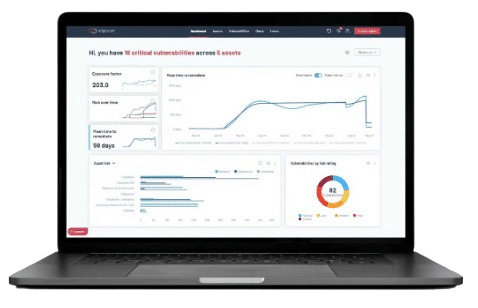
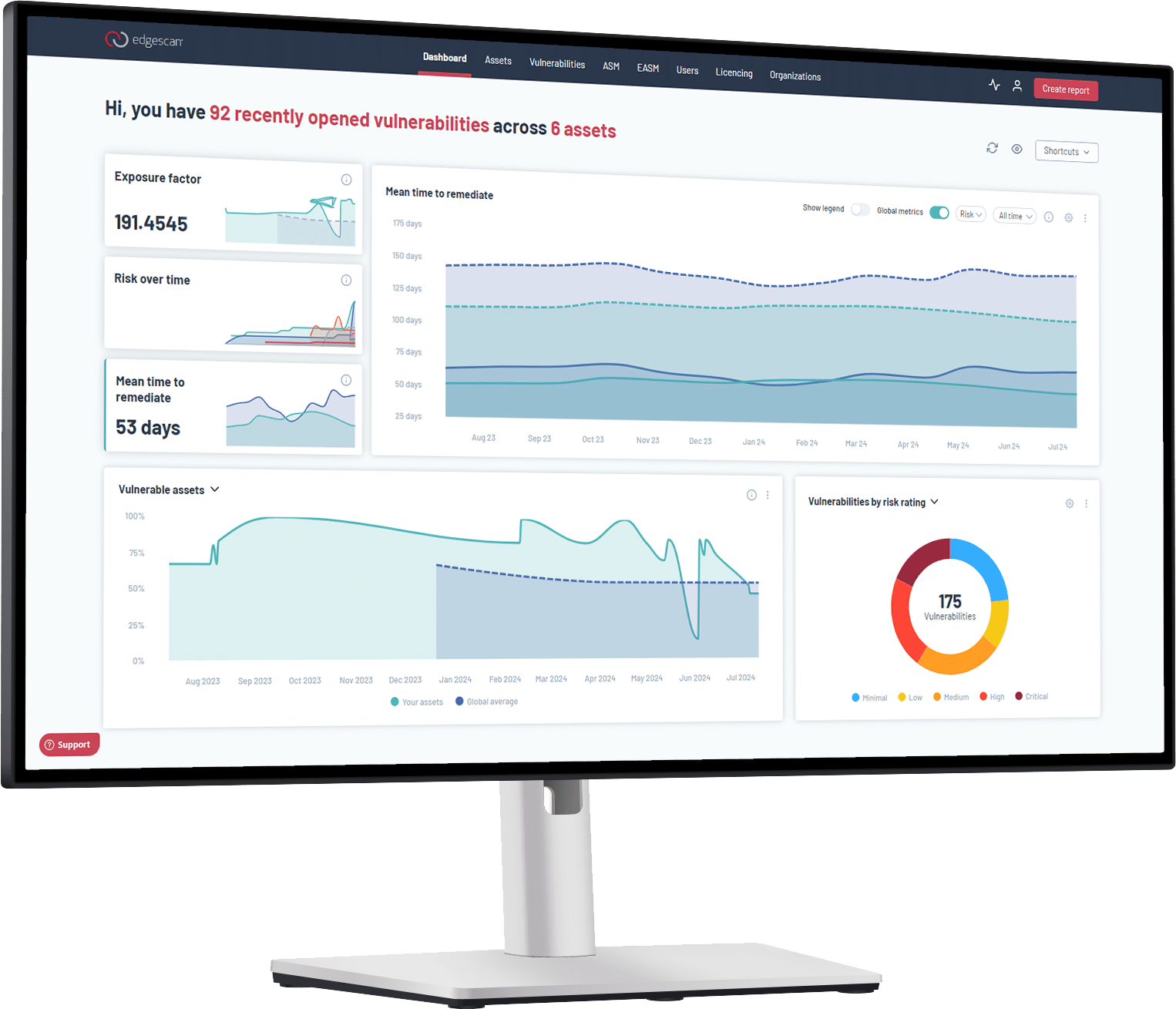
Metrics Visibility: Track mean time to remediate, backlog age, and remediation velocity to identify where governance processes need improvement.
The PTaaS Guide emphasises unlimited retesting as core capability: “Once vulnerabilities are fixed, Edgescan can retest vulnerabilities to confirm they’ve been fully resolved.”
This validation closes the loop between governance policy (“vulnerabilities must be remediated”) and operational reality (“fixes actually work”).
Compliance Reporting: Automating Governance Evidence
Security governance generates extensive compliance evidence requirements: vulnerability scan reports, penetration test findings, remediation tracking, access reviews, and configuration validation.
Traditional approaches involve manually compiling evidence from multiple tools and spreadsheets to create audit packages. This creates several operational problems:
Duplicate Work: The same underlying security data gets reformatted for different compliance frameworks and different assessors.
Point-in-Time Evidence: Compliance reports represent security posture at specific audit moments rather than providing continuous governance visibility.
Manual Effort: Each compliance cycle requires largely manual compilation despite addressing the same fundamental security controls.
Inconsistent Standards: Different auditors request different evidence formats, creating work that doesn’t scale across multiple compliance requirements.
Modern governance platforms address this through automated compliance mapping. The PTaaS Guide highlights: “PCI / NIST / ISO-Aligned Reporting” as core PTaaS capability.
The same vulnerability assessment data that drives remediation also generates compliance reports aligned with multiple frameworks without manual reformatting. Integration with operational tools creates audit trails automatically documenting the governance lifecycle.
Prioritisation: Focusing Governance Resources
Not all security issues violate governance policies equally. Effective operational governance requires risk-based prioritisation that focuses limited remediation resources on violations with highest business impact.
The PTaaS Guide describes the prioritisation challenge: “Complex tech stacks and systems architectures can lead to poor visibility across your assets and more difficult prioritization and remediation.”
Modern prioritisation requires multiple signals:
Regulatory Impact: Does the vulnerability expose data subject to specific regulatory requirements (GDPR, PCI DSS, HIPAA)? Violations affecting regulated data carry higher governance priority.
Exploit Probability: Is the vulnerability type actively exploited in the wild? The PTaaS Guide references AI Threat Intelligence, EPSS, and CISA KEV integration for prioritisation.
Business Context: Which business functions depend on the affected system? Vulnerabilities in revenue-critical applications demand different urgency than development tools.
Asset Criticality: What data and functionality does the system handle? Exposure in customer-facing payment systems requires different priority than internal reporting tools.
Remediation Complexity: Can the fix deploy quickly or does it require architecture changes? High-risk, easy-fix violations should jump the queue.
Generic CVSS scoring doesn’t capture these governance-relevant factors. A 9.8 CVSS vulnerability in a non-production development environment violates policy differently than a 6.5 CVSS authentication flaw in your primary customer API processing regulated data.
Putting It Into Practice
Translating security governance from policy documentation to operational reality requires specific capabilities SecOps teams can implement:
Deploy Continuous Assessment: Implement unlimited scanning across web applications, APIs, and infrastructure to validate governance policies continuously rather than quarterly.
Demand Validated Findings: Ensure vulnerability reports represent real policy violations through hybrid validation combining automation efficiency with expert accuracy.
Integrate Workflow Tools: Connect security findings directly to ticketing systems, CI/CD pipelines, and collaboration tools where remediation actually happens.
Focus on Business Logic: Complement automated scanning with expert penetration testing targeting governance violations that scanners miss – particularly around access controls and data exposure.
Automate Compliance Reporting: Map vulnerability data to multiple compliance frameworks automatically rather than manually compiling evidence for each audit cycle.
Measure Remediation Velocity: Track mean time to remediate governance violations and backlog age to identify where processes need improvement.
Validate Fixes Work: Confirm remediation through retesting rather than assuming reported fixes resolve underlying policy violations.
The operational burden is manageable when platforms handle automation efficiently while preserving expert analysis for scenarios requiring human judgment.
The alternative – quarterly compliance exercises with governance violations persisting for months – creates persistent exposure that attackers reliably exploit and auditors reliably flag.
Ready to operationalise security governance? Start here.