


Security governance policies mean nothing if violated code reaches production. The challenge DevSecOps teams face is embedding governance controls directly into development pipelines so policy violations are caught and fixed before deployment – not discovered during quarterly audits.
With Global Information Governance Day this February, it’s worth examining how shift-left security translates governance requirements from documentation into automated guardrails that prevent policy violations without slowing delivery velocity.
The Governance Deployment Gap
Most organisations maintain security governance policies covering secure coding practices, vulnerability management, data protection, and access controls. These policies define security requirements at abstract level:
“All code must be scanned for security vulnerabilities before production deployment.” “Secrets and credentials must never be committed to source code repositories.” “Critical vulnerabilities must be remediated within 30 days.” “All external dependencies must be maintained at current patched versions.”
Implementation reality in fast-moving development environments is different. Teams deploy multiple times daily through CI/CD pipelines. Security reviews happen after code is written, when fixes are expensive and timelines are compressed.
The PTaaS Guide identifies this as a core challenge: development velocity and security validation operate on different timescales, creating gaps where governance policies are violated between code commit and security detection.
Shift-Left Governance: Automated Prevention vs. Manual Detection
Traditional security governance operates as gate – code is written, then security reviews it, then findings go back to developers for remediation. This creates several problems:
Late Detection: Security issues discovered after code is complete require rework when timelines are compressed and business pressure to ship is highest.
Context Loss: Developers returning to fix security issues weeks after writing code have moved mentally to other projects, increasing fix time and error rates.
Adversarial Dynamics: Security teams blocking deployments for governance violations creates friction that leads development teams to view security as obstacle rather than enabler.
Scaling Failures: Manual security reviews can’t keep pace with multiple daily deployments across dozens of microservices and applications.
Shift-left security embeds governance controls directly into development pipelines as automated checks that catch policy violations immediately:
Immediate Feedback: Developers receive security findings within minutes of code commit rather than weeks later during security review.
Context Preservation: Developers fix issues while code and context are fresh, reducing remediation time and errors.
Automated Enforcement: Governance policies are enforced automatically through pipeline checks rather than requiring manual security team intervention for every deployment.
Scalability: Automated checks scale to hundreds of deployments daily without linear increase in security team effort.
The fundamental shift is from manual detection after development to automated prevention during development.
Static Analysis: Governance Controls in Code
Static Application Security Testing (SAST) analyses source code for security vulnerabilities without executing the application. This enables governance enforcement before code ever runs.
SAST tools integrated into CI/CD pipelines identify common policy violations:
Hardcoded Secrets: Credentials, API keys, and secrets embedded in source code violate fundamental security governance. SAST tools detect these patterns and block commits containing them.
Injection Vulnerabilities: SQL injection, command injection, and other input validation failures violate secure coding policies. SAST identifies vulnerable patterns like string concatenation in SQL queries.
Weak Cryptography: Use of deprecated encryption algorithms or insufficient key lengths violates data protection governance. SAST flags weak cryptographic implementations.
Access Control Flaws: Missing authorisation checks or broken access control logic violates security policies. SAST can identify some of these patterns through code analysis.
The PTaaS Guide emphasises that governance policies must address what automated tools cannot detect. According to PCI DSS requirements cited in the guide: “A penetration test is an active process that usually includes exploiting identified vulnerabilities and discovering business logic weaknesses. Scanning for vulnerabilities alone is not a penetration test.”
This means SAST provides baseline governance enforcement but must be complemented with other testing approaches for comprehensive policy compliance.
Secrets Management: Never Trust Source Code
One of the most fundamental governance violations is committing secrets to source code repositories. Once credentials exist in version control history, they’re effectively public regardless of later removal.
Governance policies universally prohibit this practice. Operational enforcement requires specific controls:
Pre-Commit Hooks: Git hooks that scan commit content for secret patterns and block commits containing them before code enters repository.
Secrets Scanning Tools: Automated tools (TruffleHog, git-secrets, GitHub secret scanning) that detect accidentally committed credentials in real-time.
Secrets Management Services: Platform services (AWS Secrets Manager, Azure Key Vault, HashiCorp Vault) that provide encrypted storage, access controls, and audit logs for credentials – making proper secrets management the path of least resistance.
Developer Education: Training that explains why hardcoded secrets violate governance and demonstrates proper secrets management workflow.
The goal is making governance-compliant secrets management automatic and easier than policy-violating hardcoded credentials.
Dependency Management: Governance Over Third-Party Code
Modern applications depend heavily on third-party libraries and frameworks. Each dependency introduces potential security vulnerabilities and license compliance obligations.
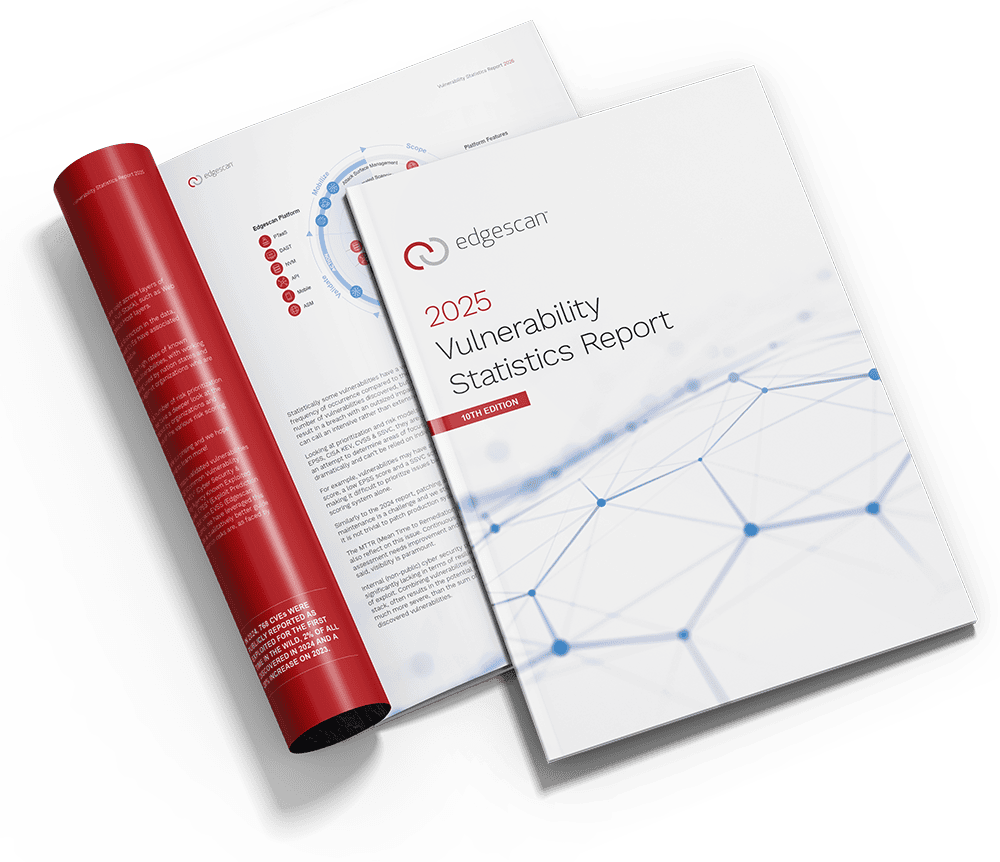
According to the PTaaS Guide, 40,009 new CVEs were published in 2024. Many affect common libraries that development teams use. Without governance controls over dependencies, applications ship with known vulnerabilities despite organisational policies requiring current patched versions.
Software Composition Analysis (SCA) tools provide automated governance over dependencies:
Vulnerability Detection: Identify dependencies with known CVEs and alert on severity levels that violate governance policies.
License Compliance: Flag dependencies with licenses incompatible with organisational policies or create legal obligations.
Update Recommendations: Suggest secure versions and provide automated pull requests for dependency updates.
Policy Enforcement: Block deployments containing dependencies that violate governance policies for maximum vulnerability age or severity.
Integration with CI/CD pipelines means dependency governance is enforced automatically at build time rather than discovered during security audits months later.
Dynamic Testing: Runtime Governance Validation
While SAST analyses code statically, Dynamic Application Security Testing (DAST) validates running applications for security vulnerabilities. This catches governance violations that only appear at runtime.
The PTaaS Guide describes DAST as component of comprehensive security testing. DAST integrated into CI/CD pipelines provides:
Authentication Testing: Verify access controls actually enforce governance policies around authentication and authorisation.
Injection Detection: Identify SQL injection, command injection, and other runtime exploitable vulnerabilities that violate secure coding policies.
Configuration Validation: Detect misconfigured security headers, exposed debug information, and other deployment configuration that violates governance.
API Security: Test API endpoints for authentication bypass, broken object level authorisation, and other API-specific policy violations.
DAST provides different coverage than SAST. Both are necessary for comprehensive governance enforcement. SAST catches problems in code; DAST catches problems in runtime configuration and deployment.
Infrastructure as Code: Governance Before Deployment
Cloud infrastructure increasingly gets defined through code (Terraform, CloudFormation, Kubernetes manifests). This enables governance controls over infrastructure before deployment.
Infrastructure as Code (IaC) scanning validates that cloud resources comply with security policies:
Storage Configuration: Detect misconfigured S3 buckets, Azure storage, or other data storage that violates data protection governance through public access or missing encryption.
Network Controls: Identify overly permissive security groups, network ACLs, or firewall rules that violate network segmentation policies.
IAM Policies: Flag excessive permissions or policy configurations that violate least-privilege access governance.
Encryption Requirements: Verify that data stores and communications channels meet encryption requirements defined in governance policies.
Logging and Monitoring: Ensure audit logging and monitoring configurations meet governance requirements for incident detection and investigation.
IaC scanning integrated into deployment pipelines prevents governance violations in infrastructure before resources are created – when fixes are trivial rather than requiring production changes.
Business Logic: Where Automation Meets Limits
The PTaaS Guide emphasises a critical limitation of automated governance enforcement: “Automated Penetration testing currently does not detect such vulnerabilities as it does not understand context.”
Business logic vulnerabilities exploit how applications are designed to work. Examples include:
- Workflow manipulation to skip payment verification while receiving goods
- Parameter tampering to access other users’ data by manipulating account identifiers
- Privilege escalation through flaws in role-based access control logic
- Abuse of legitimate export features to exfiltrate more data than intended
According to PCI DSS V.4 quoted in the PTaaS Guide: “Until automated pentesting can understand a business process of a system, and therefore, break that system, it cannot be called a penetration test.”
This creates a governance challenge for DevSecOps. Automated pipeline checks catch technical vulnerabilities efficiently. They completely miss business logic flaws that often represent highest business risk.
Addressing business logic governance requires:
Threat Modeling: During design phase, explicitly map data flows and identify where business logic assumptions could be exploited to violate access control or data protection policies.
Expert Security Reviews: For critical applications, supplement automated checks with expert penetration testing specifically targeting business logic flaws through manual analysis.
Design Documentation: Document authorisation logic, workflow dependencies, and data access assumptions so security reviewers can validate implementation matches governance intent.
Test Case Development: Create specific test cases for business logic security requirements that can be incorporated into automated testing suites.
The operational reality is that comprehensive governance requires both automated checks that scale efficiently AND expert analysis for scenarios automation cannot handle.
Remediation Integration: From Finding to Fix
Identifying governance violations in pipelines is necessary but insufficient. Development teams need clear remediation guidance integrated into their workflows.
Effective remediation integration requires:
Specific Fix Guidance: Security tools should provide exact remediation steps, not just identify problems. For SQL injection findings, show the vulnerable code and provide the correct parameterised query implementation.
Code Examples: Demonstrate secure implementations for common patterns so developers can learn correct approaches alongside fixing specific issues.
IDE Integration: Security findings surfaced directly in development environments where code is written rather than requiring separate security portals.
Automated Fixes: Where possible, provide automated remediation through pull requests or code suggestions that developers can review and merge.
Prioritised Remediation: Not all findings require immediate fix before deployment. Clear severity levels help developers understand what blocks deployment versus what requires eventual remediation.
The goal is making governance-compliant code the path of least resistance rather than requiring developers to become security experts.
Metrics That Matter for Governance
Development pipeline governance needs metrics that demonstrate continuous improvement and identify where processes need refinement.
Key metrics for DevSecOps governance include:
Fix Time by Severity: Track how long critical, high, medium, and low severity findings remain unresolved. Governance policies often specify different timelines for different severity levels.
Vulnerability Introduction Rate: Measure new security findings introduced per deployment or time period. Increasing rates indicate gaps in developer training or automated checks.
False Positive Rate: Percentage of pipeline security findings that don’t represent actual policy violations. High false positive rates waste developer time and reduce confidence in security tools.
Pipeline Impact: Time added to deployment by security checks. Governance shouldn’t prevent deployment but shouldn’t add hours of delay either.
Coverage Metrics: Percentage of code covered by automated security checks, percentage of applications with IaC scanning, percentage of dependencies scanned for vulnerabilities.
Exception Rates: How often security checks are bypassed or overridden. High exception rates indicate either tool misconfiguration or inadequate developer training on security requirements.
These operational metrics demonstrate whether governance controls embedded in pipelines are actually improving security posture or just creating friction.
Making Security Automatic
The fundamental goal of embedding governance in development pipelines is making security the automatic outcome of normal development workflow rather than requiring special security effort for each deployment.
This requires specific capabilities DevSecOps teams can implement:
Integrate SAST into CI/CD: Make security scanning automatic part of build process, not manual pre-release exercise.
Deploy Secrets Scanning: Block commits containing credentials before they enter repositories rather than discovering them during audits.
Implement Dependency Scanning: Automatically flag vulnerable dependencies at build time with clear update guidance.
Add DAST to Deployment: Test deployed applications for runtime vulnerabilities in staging environments before production promotion.
Enable IaC Scanning: Validate infrastructure configurations meet security policies before resource creation.
Provide Developer Training: Help development teams understand why governance controls exist and how to write secure code that passes automated checks.
Schedule Expert Reviews: For critical applications processing sensitive data, supplement automated checks with expert penetration testing focused on business logic flaws automation misses.
Measure and Improve: Track metrics showing governance programme effectiveness and use data to identify where controls need refinement.
The challenge isn’t adding more security tools – it’s integrating governance controls seamlessly into existing development workflows so compliance happens automatically.
Building It In
Security governance embedded in development pipelines prevents policy violations before they reach production. This represents fundamental shift from manual security reviews after development to automated governance controls during development.
The technical controls exist: SAST for code analysis, secrets scanning for credential management, SCA for dependency governance, DAST for runtime validation, IaC scanning for infrastructure compliance. The operational challenge is integrating these controls into CI/CD pipelines in ways that enforce governance without creating excessive friction or false positives that reduce developer productivity.
Development teams that embed security governance from initial design through production deployment ship compliant code at velocity. Those treating security as separate review phase ship policy violations that persist until discovered during audits – often months after deployment.
The governance requirements exist. The deployment velocity exists. The question is whether your organisation builds policy enforcement into pipelines before violations become production exposures.
Ready to embed governance controls in your development pipeline? Start here.