

So I say this on nearly every first call, usually inside the first two minutes: we’re a service, not a tool. And that one line tends to do more work than any slide I could put in front of someone.
But “service, not a tool” is easy to say, and easy to wave off as marketing. So let me tell you what I actually mean by it, because the difference isn’t a feature you can point at. It’s about who ends up doing the work.
When I walk someone through it, it comes down to three things. Consolidation, validation, and flexibility. Here’s what each one changes once you’re actually living with it, day to day.
The consolidation piece
What I mean by consolidation is this. Most teams I talk to are covering the full stack with a drawer full of separate tools. One thing for web apps, another for APIs, something else for the external network, and someone internally stitching it all together on a Friday afternoon.
And when I say full stack, I mean the whole thing. Your web apps, your APIs, your mobile, and the internal network you’d honestly rather not think about. The parts that get tested on different schedules by different tools are usually the parts where things slip.
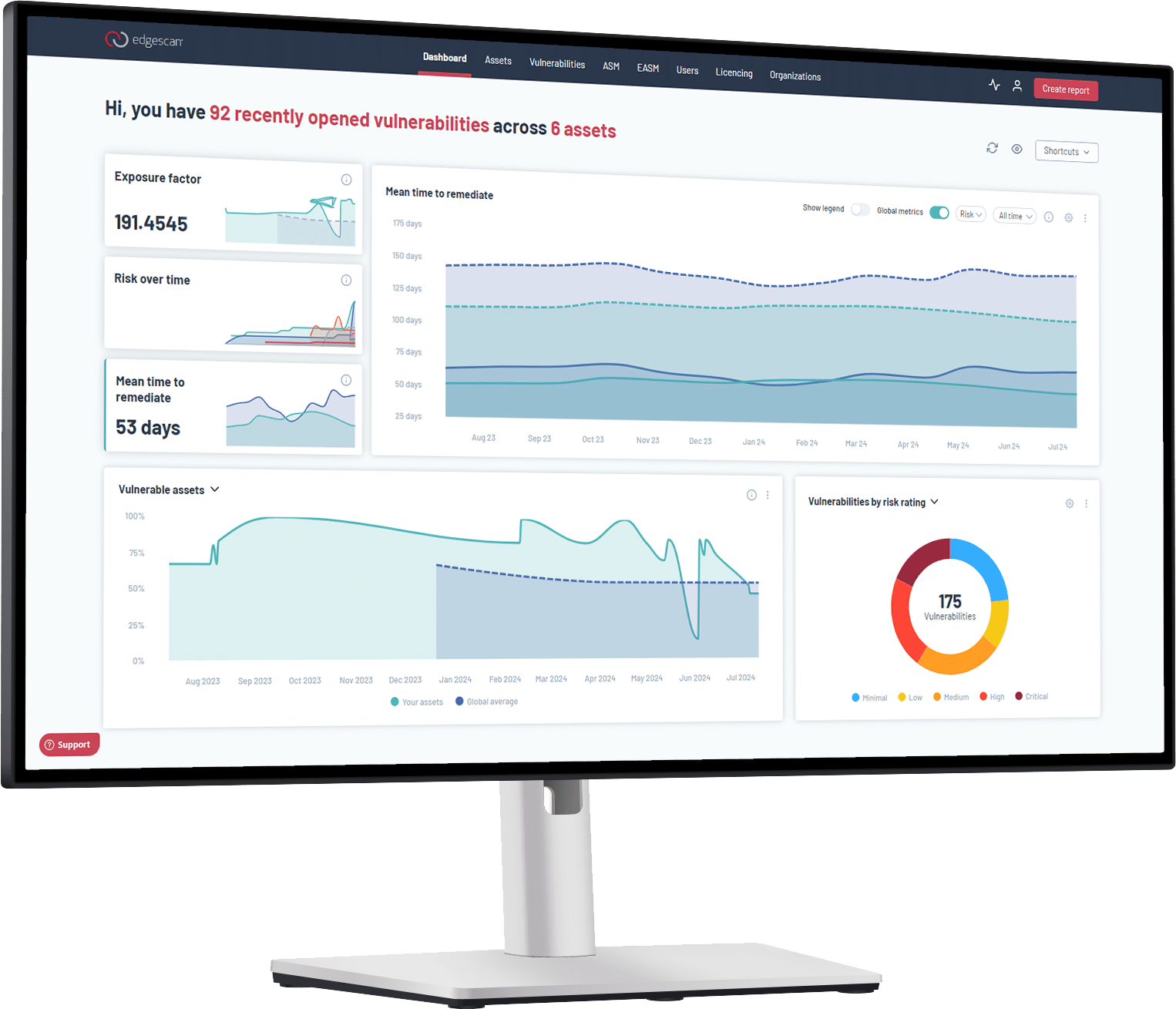
Here’s the lesson in it, and it holds whether you ever talk to us or not. Fragmentation has a cost that never shows up on any one invoice. It’s the hour spent reconciling five reports into one picture, the gaps between tools that nobody owns, and the fact that no single view tells you your real exposure. A service consolidates that into one dataset, so the picture is already assembled before it reaches you.
The validation piece
The second thing I mentioned is validation, and I’ll keep this one short because it deserves its own conversation. What I mean is that before a finding reaches you, a real person has confirmed it’s actually exploitable.
Not crowdsourced. Not a gig worker on a platform somewhere. A full-time, certified pen tester whose job is to separate what’s real from the noise. The reason that matters is the part people miss: buying a tool doesn’t remove the validation work, it just moves it onto your team. A service takes that work off your plate instead.
The flexibility piece
The third piece is flexibility, and this is the one I wish more buyers pushed on, because it quietly shapes how secure you actually end up being.
Here’s what I mean. We see it a lot with the day-rate model, the way a lot of consultant pen testers charge. You buy a set number of days. Then a fix needs verifying, so you pay for more days to retest. The cost becomes a bit of an unknown, and it swings every time your scope moves.
And the lesson underneath that is the important bit. When a retest costs extra every single time, teams quietly retest less. Which means fixes go out the door unverified, and “we patched it” starts standing in for “we confirmed it’s actually gone.” A flexible model, where retesting and continuous scanning are just included, changes that behavior. You verify because there’s no reason not to.
So, pulling those three back together
The consolidation piece means one picture instead of five. The validation piece means the work of proving a finding lands on us, not on your team. And the flexibility piece means the way you’re billed stops quietly discouraging the thing you most want people to do, which is check that the fix actually worked.
That’s what I mean when I say service, not a tool. It isn’t a longer feature list. It’s a different answer to one question: after the scanner runs, who’s doing the work, and is that really the best use of your team.
I’d genuinely love to hear how you’re running this today, whether it’s consolidated or spread across a drawer of tools, and where the friction actually is for you.
And if you want to see the difference rather than take my word for it, request a demo.